AMBAEX · PROCUREMENT INTELLIGENCE
Why Portuguese Food Manufacturers Can’t Afford to Source Encapsulated Salt Remotely Anymore
Portugal’s €14–15B food sector imports 100% of its encapsulated salt. Doing that remotely introduces risks that directly hit product quality, compliance, and margin.
1. Why Remote Sourcing Is Misaligned with the Real Risk in Portugal
Portugal’s food product manufacturing industry represents approximately €14–15 billion in annual revenue and more than 12,000 registered food manufacturing businesses across meat, bakery, snacks, dairy, and prepared meals. In such a sizeable ecosystem, the functionality of a single ingredient like encapsulated salt can affect millions of euros in finished‑product value over time.
At the same time, encapsulated salt is no longer an experimental technology. Global market estimates place encapsulated salt sales already in the low‑billion‑dollar range, with forecasts roughly doubling this figure over a 10‑year horizon — implying a compound annual growth rate in the high‑single digits. That is three to four times faster than the 1–2% annual growth expected for mature food processing sectors in Europe.
Overlay this with another fact: processed meat products are consistently identified as one of the largest contributors to dietary sodium intake, often accounting for around one fifth of total salt intake in many diets. This means that any misalignment between specification and reality on salt functionality in meat, charcuterie, and restructured products is not just a technical nuisance; it is a strategic risk that touches product performance, regulatory positioning, and brand health.
Yet many procurement teams still manage sourcing of highly technical inputs from a distance: spreadsheets of potential suppliers, generic certificates, self‑declarations, and a couple of video calls. What a spreadsheet cannot show is whether a factory floor can reliably execute a specific encapsulation profile, whether a line has the real capacity claimed in a brochure, or whether the supplier's interpretation of "food‑grade encapsulation" actually matches your process window and regulatory requirements in Portugal.
2. What Encapsulated Salt Really Is – And Why It Matters Commercially
Encapsulated salt is not "just salt with a coating." It is a functional system in which sodium chloride particles are covered with a controlled layer of lipids or polymers designed to delay or modulate their dissolution profile.
From a commercial point of view, three aspects matter most:
⏱️ Timing of functionality
In meat products, free salt added too early aggressively solubilizes myofibrillar proteins, which can lead to a gummy bite, excessive purge, and negative texture perception. Encapsulation delays this interaction until a later thermal or mechanical trigger, allowing manufacturers to pursue salt‑reduction or texture‑improvement targets without sacrificing product integrity.
⚙️ Process efficiency and line performance
Encapsulated systems often show better flowability and reduced clumping compared with hygroscopic standard salt. In practice, this means fewer micro‑stoppages, less equipment adhesion, shorter cleaning times, and more consistent dosing. Taken across a year of production, this translates into incremental line‑efficiency gains and reduced waste.
🧂 Sodium reduction without sensory collapse
Global research on sodium reduction in meat and other products shows that purely "cutting salt" by 30–40% is technically possible, but usually carries penalties: weaker texture, higher water activity, and shorter shelf life. Encapsulation and other structure‑modification techniques create a pathway to reduce total sodium while maintaining or even enhancing saltiness perception at the point of consumption.
For Portuguese manufacturers operating in highly competitive categories (sausages, cured meats, frozen bakery, coated snacks), these three levers — texture, efficiency, and health positioning — map directly to differentiating claims and margin protection.
3. Supply Reality: No Domestic Producers, 100% Imported Technology
Portugal is rightly known for its high‑quality traditional sea salt and Flor de Sal. However, when you narrow the focus to industrial microencapsulation of salt for controlled release, there are currently no major producers based in Portugal.
Instead, Portuguese food manufacturers must import encapsulated salt from:
- US‑headquartered players with European distribution — Large ingredient companies supply encapsulated salts under proprietary brands, with production usually located outside Portugal and deliveries routed via EU warehouses and distributors.
- EU‑based encapsulation specialists — Several European firms headquartered in Ireland, Austria, and other Member States focus on microencapsulation technologies for functional foods and can apply these platforms to salt on a custom or semi‑custom basis.
This has two consequences for Portugal:
- All industrial encapsulated salt is cross‑border — Every tonne entering a Portuguese factory has already traveled through another jurisdiction. Local teams rarely see the production lines, quality labs, or raw‑material streams that define the actual risk profile.
- Competitive advantage comes from better supplier selection and verification — not from local capacity — Because the playing field is inherently international, the edge for Portuguese manufacturers comes from making better, faster, properly verified picks from the European and global supplier pool.
4. Where Encapsulated Salt Creates the Most Value in Portuguese Applications
While encapsulated salt can be used across many categories, some applications have an especially strong business case for Portuguese operations:
| Category | Why It Matters |
|---|---|
| 🌭 Sausages, burgers & restructured meats | Central to value‑added meat in Portugal. Encapsulated salt supports improved texture, reduced purge in MAP/skin‑pack formats, and opens the door to visible "sodium‑reduced" positioning without radical flavor compromise. |
| 🥖 Bakery & frozen dough | In yeast‑based systems, premature salt interaction can slow fermentation. Encapsulation allows separation of mixing and functional salt activation, stabilizing proofing times and final volume. |
| 🍟 Snacks (chips, crackers, nuts) | Surface application of encapsulated salt can create more intense "flavor bursts" at bite time, enabling reduced total sodium for the same perceived saltiness. |
| 🧀 Fermented & cultured products | Controlling when salt becomes bioavailable supports starter culture performance and more consistent ripening profiles. |
| 💊 Fortified & functional foods | As Portuguese manufacturers develop enriched products for export, encapsulation platforms can be extended to salt, aligning process design across multiple active components. |
In each category, the underlying economic logic is similar: modest incremental cost at the ingredient level protects or enhances much larger value streams at the level of finished product, brand, and regulatory positioning.
5. The Hidden Costs of Remote‑Only Sourcing for Encapsulated Salt
When all advanced encapsulated salt must be imported and suppliers are often located several countries away, remote‑only sourcing introduces a set of quantifiable risks:
- 📉 Specification drift — Without on‑site verification, what is described in a TDS or CoA may not reflect true process capability. Even small deviations in particle‑size distribution or release profile can show up as texture issues or inconsistent saltiness.
- ⚠️ Compliance gaps — Food safety systems can look robust on paper but be inconsistently implemented on the factory floor. For products ending up in EU retail or demanding export markets, this creates risk of non‑compliance or delisting.
- 🏭 Service‑level and capacity risk — Encapsulated salt is often produced on dedicated lines with finite capacity. As a mid‑sized Portuguese buyer, you need assurance that capacity and change‑control systems will support your growth.
- ⏳ Lead‑time and continuity uncertainty — Without a clear view of the production chain, it is harder to model realistic lead times, safety stock levels, and contingency plans.
All of these risks are amplified by the fact that the Portuguese food manufacturing base is relatively fragmented, with many small and mid‑sized firms that cannot afford repeated formulation failures, rejected lots, or extended line‑stops caused by ingredient variability.
6. How AMBAEX De‑Risks Encapsulated Salt Sourcing: Identify → Verify → Execute → Rescue
AMBAEX was designed precisely for scenarios like this: high‑impact, technically complex ingredients, sourced from outside Portugal, with buyers who cannot be in every factory but still need industrial‑grade assurance.
🔍 Identify – Market intelligence, not just lists
We start by mapping real capacity and capability, not just names in a database. That involves on‑site presence at trade shows in Spain, Portugal, and Italy to identify encapsulation specialists who may not even appear in generic online directories, plus systematic cross‑checking of a supplier's public claims with the realities of your target application.
✅ Verify – Second‑party audits inside the factory
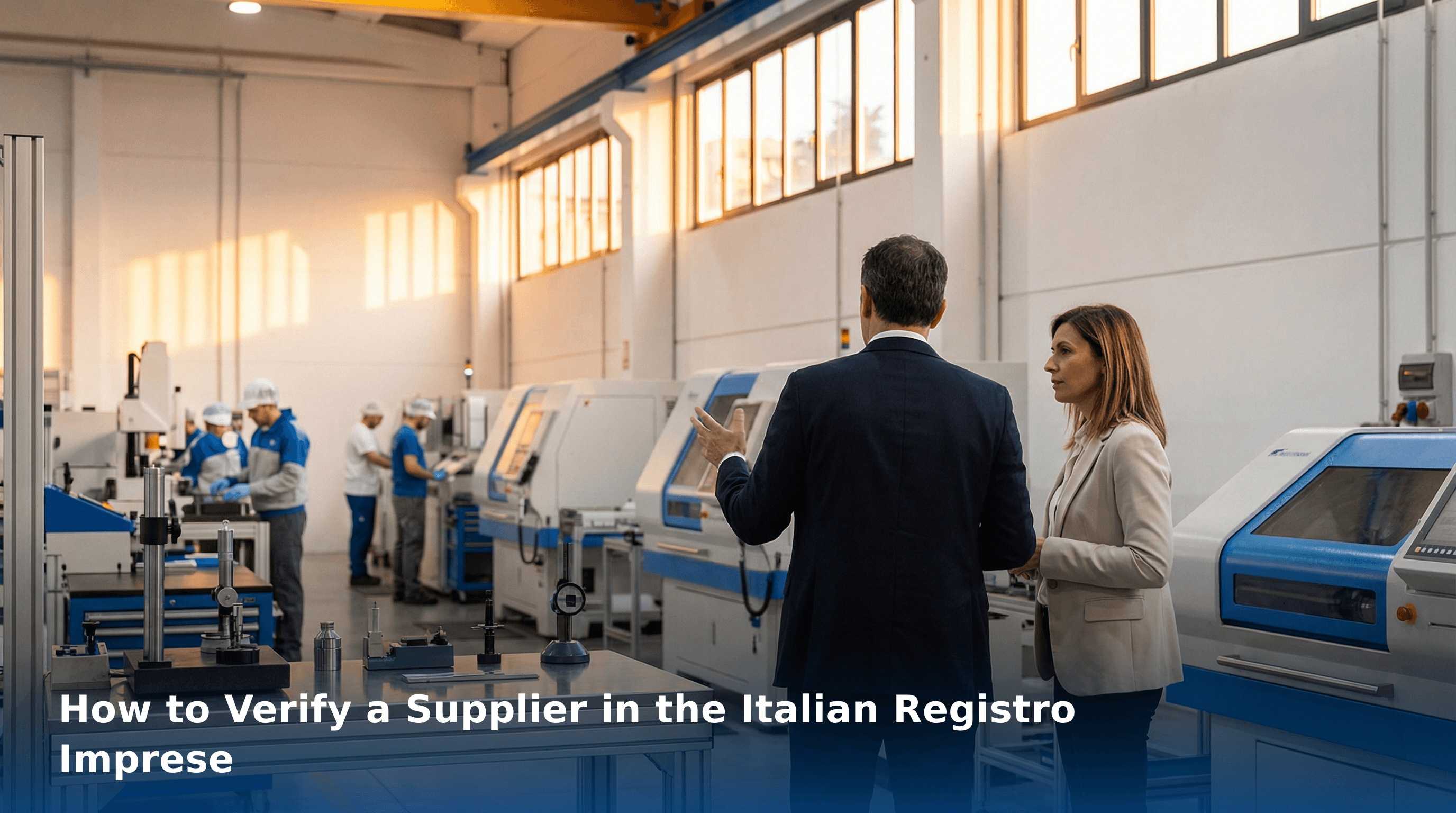
This is where the spreadsheets stop and the factory floor begins. For encapsulated salt suppliers in Southern Europe, we visit the production site as your second‑party auditor, reviewing actual equipment, process controls, and cleaning regimes. We validate critical technical parameters (particle‑size distribution, coating materials, release profiles) against your specific use‑case and regulatory framework.
🚀 Execute – Contracts, first shipments, and pre‑shipment checks
Once a supplier passes verification, we help turn that into operational reality: navigating contract structure, Incoterms, and service‑level expectations, plus performing pre‑shipment inspections to confirm that batches match the verified specification and that documentation aligns with your QA and regulatory needs in Portugal.
🆘 Rescue – Local liaison when something breaks
Industrial supply chains will always throw surprises. When they do, AMBAEX acts as your local operational liaison: rapid on‑site diagnosis of quality deviations, and coordination of corrective actions before problems cascade into extended line‑stops or product recalls.
For a Portuguese manufacturer, this means you can tap into specialist encapsulated salt technology from across Southern Europe and beyond, with local, independent eyes verifying that what you approved on paper is what actually arrives at your dock and behaves as expected in your line.
7. Technical and Commercial Specifications You Should Always Demand
To make your encapsulated salt sourcing more objective and less "story‑driven," we encourage Portuguese buyers to systematically request and compare a minimum data set from all shortlisted suppliers:
📋 Technical data to demand:
- Particle‑size distribution (mesh or micron range) with tolerances
- Coating system details (lipid or polymer type, regulatory status, allergen considerations)
- Release profile curves under relevant pH, temperature, and time conditions
- Moisture and water‑activity targets, with associated shelf‑life data
- Sodium (NaCl) content and any partial replacement by KCl or other salts
- Food‑safety documentation showing how hazards related to encapsulation are controlled
💰 Commercial points to clarify:
- Typical minimum order quantities for standard vs. custom systems (often 100–500 kg)
- Availability of smaller 20–25 kg trial batches
- Lead times from order to shipment for Portugal, including seasonal bottlenecks
- Options for EU‑only sourcing vs. non‑EU origin, with customs implications
AMBAEX integrates these technical and commercial data points into a comparable, decision‑ready format, then validates them through on‑site observation.
8. Why Ambaex Is a Force Multiplier for Portuguese Procurement Teams
In practical terms, AMBAEX gives Portuguese procurement and technical teams three advantages:
- 🧠 Fewer blind spots — Instead of making high‑impact decisions based only on PDFs and video calls, you get independent, on‑site verification in the producer's own facility.
- ⚡ Faster, more confident adoption of advanced technologies — Because we work across Spain, Portugal, and Italy, we see a broad spectrum of functional ingredient deployments. That allows us to filter suppliers quickly, so you can move from "interesting technology" to "validated supplier" without losing a year to trial and error.
- 🤝 Local execution for global supply — Your suppliers can sit in Ireland, Austria, or the US. Your factory is in Portugal. AMBAEX stands in the middle, in the same time zone as your suppliers, speaking the same operational language and representing your interests on the ground.
🔍 Ready to Verify Your Encapsulated Salt Supply Chain?
Portugal’s food sector is too large — and encapsulated salt too strategic — to leave supplier decisions to chance. If you're sourcing this critical ingredient from outside Portugal, AMBAEX gives you the local, independent verification you need to protect your product, your brand, and your margins.
📩 Contact AMBAEX to discuss an encapsulated salt supplier audit →
¿Prefieres hablar en portugués o español? Escríbenos directamente.
💬 Hablar con AMBAEX por WhatsApp