The Chemical Behind Most Truffle Oil
The compound responsible for the flavour in the majority of commercial truffle oil is 2,4-dithiapentane. It is a synthetic aromatic molecule derived from petrochemical processes. It smells, to varying degrees, like black truffle. It has no connection to any mushroom, any forest floor, or any harvest season. It is cheap to produce, stable in oil, and legally permitted as a flavouring ingredient.
It is also the ingredient in most truffle oil sold to professional kitchens across European markets, including products sold at premium price points with evocative packaging and artisan language.
This is not a niche industry secret. Food scientists, restaurant critics, and commodity buyers have discussed it openly for years. The gap between the knowledge base of informed buyers and the standard procurement practice of F&B purchasing departments is where the problem persists.
For a professional kitchen that has built menu claims around truffle sourcing, using a synthetic-compound product is a liability. It is not a question of guest taste sensitivity — most guests cannot distinguish the compound from the real thing in a casual tasting. The problem is what happens when someone does check, or when the kitchen's provenance claims are examined against what is actually in the preparation.
How to Read a Truffle Oil Label
The label is the first diagnostic tool. Reading it correctly takes less than thirty seconds and eliminates most synthetic products immediately.
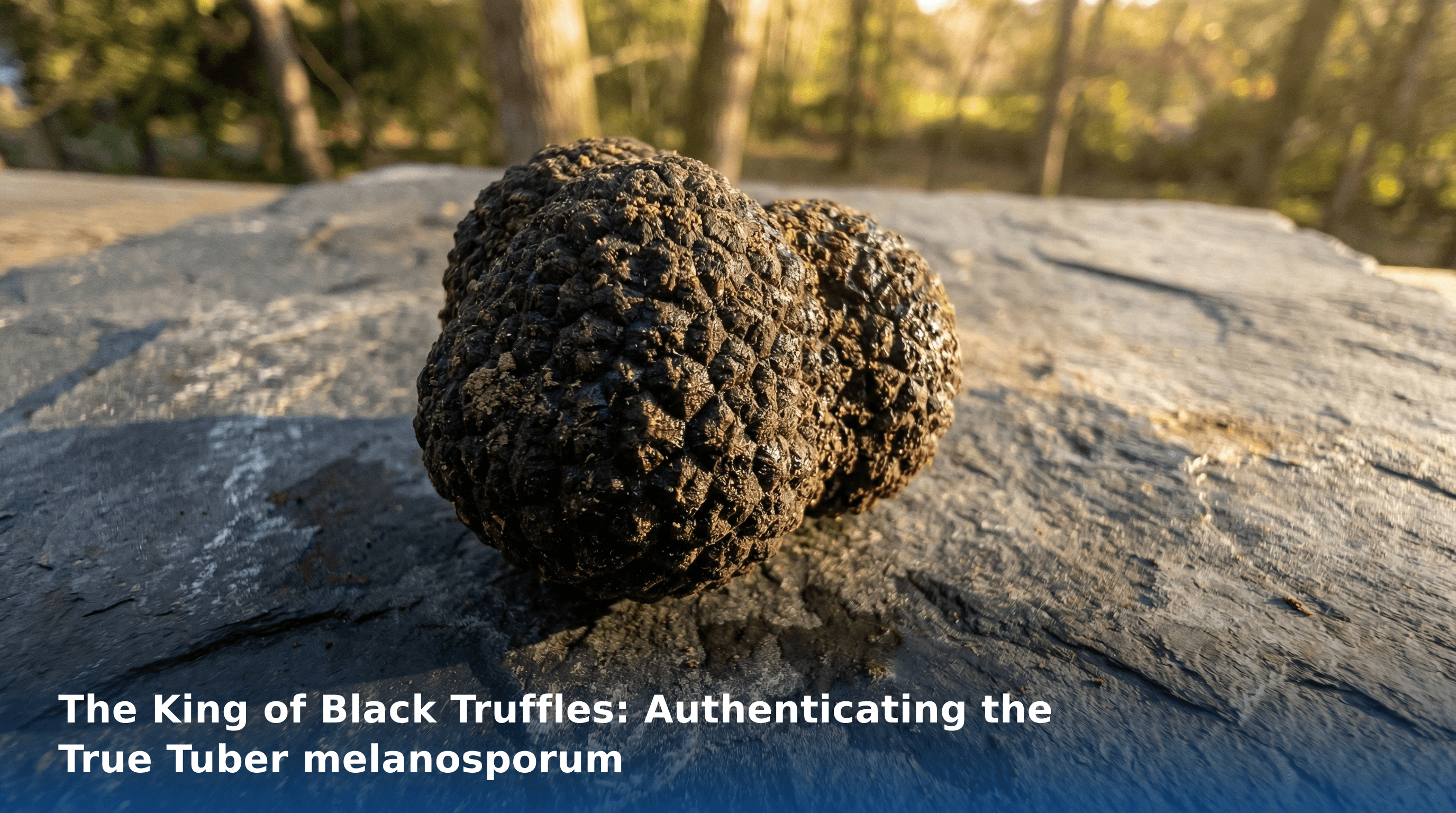
Look for the ingredients list. A genuine truffle oil — produced by infusing actual truffle material in a quality oil base — will have an ingredient list of two or three items: the oil carrier (typically extra virgin olive oil or a neutral oil), and truffle or truffle extract at a stated percentage. Some producers list a specific truffle species: Tuber melanosporum for Périgord-style black truffle, Tuber magnatum for white.
A synthetic product will list "natural flavouring," "truffle flavouring," or "truffle aroma" as a distinct ingredient separate from any actual truffle content. The word "flavouring" is the signal. Regulation permits "natural flavouring" to include compounds derived from non-truffle biological sources, as long as the underlying molecule occurs naturally somewhere. 2,4-dithiapentane qualifies. The labelling is technically honest and practically misleading.
Additional warning signals:
- No harvest date or season reference. Genuine truffle is a seasonal product. Real producers reference the season because it matters.
- Origin vagueness. "Product of Europe" without a specific region means nothing. Genuine truffle origin — Teruel, Soria, Périgord, Norcia — is a selling point that producers who have it will name.
- Price. Genuine infused truffle oil produced from real material at meaningful quantities cannot be cheap. If the price is below approximately €15 for 250ml at trade, the economics of genuine content do not work.
- Claims of "intense truffle flavour." Real truffle is subtle, variable, and seasonal. A product promising intensity is almost certainly delivering it through the synthetic compound.
What Genuine Wild-Harvest Truffle Looks and Tastes Like
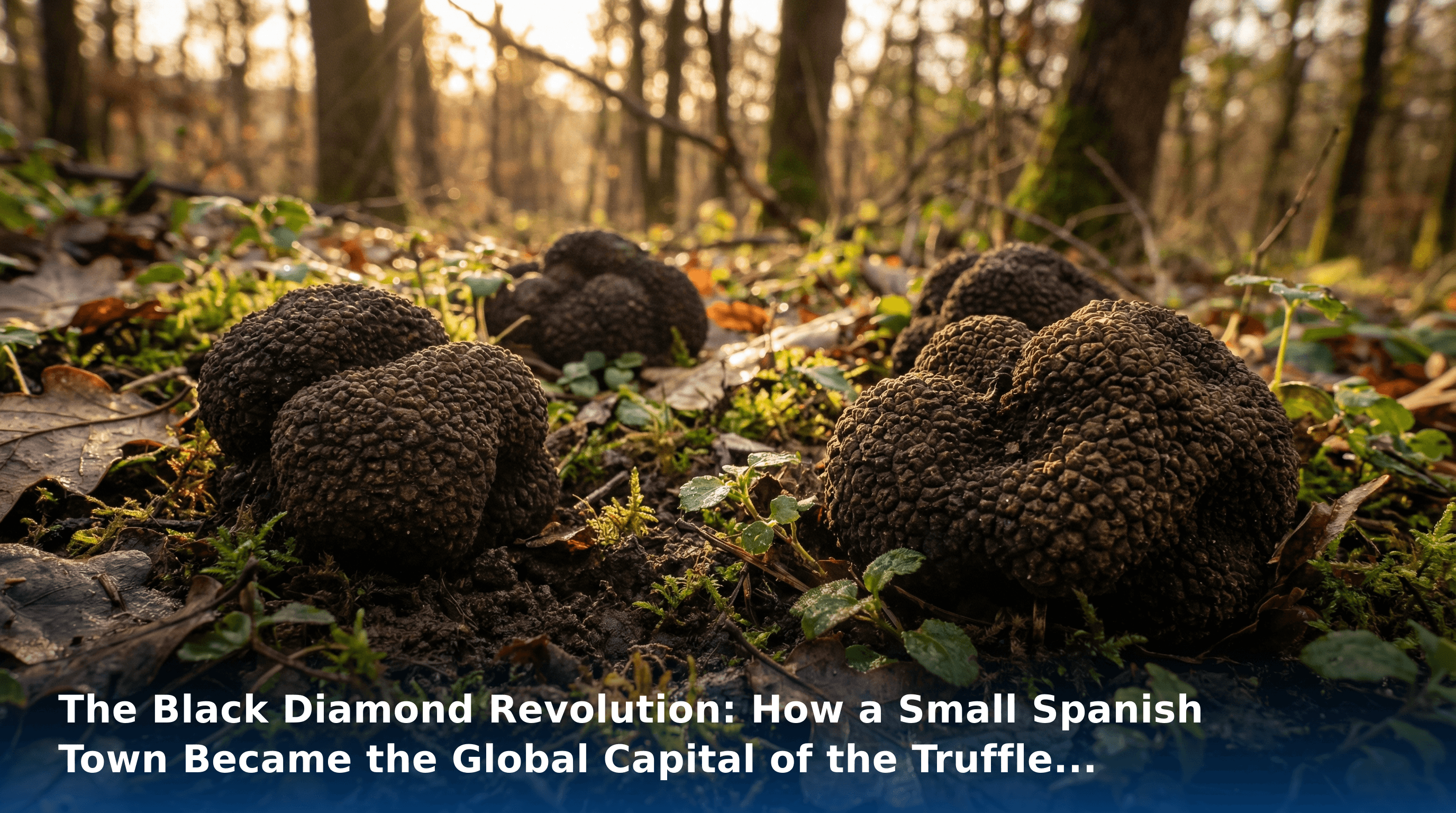
Spain is a significant truffle-producing country. The Spanish interior — particularly the highlands of Teruel, Cuenca, Soria, and the foothills of the Pyrenees — produces Tuber melanosporum of genuine quality, harvested from trained dogs working holm oak groves from late November through March.
Wild-harvest Spanish truffle has a flavour profile that is earthy, musky, and complex in a way that changes across the season and across individual specimens. Early-season truffle tends to be more delicate. Peak-season product, typically January, is more intense. The flavour is not uniform — which is, paradoxically, one of the markers of genuineness. Uniformity of flavour in a truffle product is a signal of synthetic standardisation.
Fresh truffle, properly stored, has a shelf life measured in days to weeks depending on format. Preserved formats — truffle in oil, dried slices, truffle paste — extend this, but the quality and character of the base product determines everything. A poor truffle preserved in oil remains a poor truffle. A high-quality specimen preserved with care delivers genuine value even in processed format.
For professional kitchens, the practical application is typically shaved fresh over a finished dish, incorporated into a butter or oil at service, or used in a base preparation where truffle character needs to carry through cooking. In each case, genuine product behaves differently from the synthetic alternative — less volatile at heat, more nuanced at room temperature, and more variable in a way that requires skilled handling.
How Ambaex Verifies Source and Guarantees No Synthetic Products
Ambaex audits truffle sourcing at the producer level, which in practice means verifying the harvest operation and the processing facility separately.
At the harvest level, verification involves reviewing the producer's registered truffle grove records, the harvest season logs, and the traceability documentation linking individual lots to specific geographical origins. This is not bureaucratic process — it is the same information a genuine producer uses to price their product and manage their supply chain.
At the processing level — where truffle is preserved in oil or converted to other formats — the audit reviews the ingredient declaration, the input materials documentation, and the production process records. A facility that introduces synthetic flavourings at this stage leaves a record. Facilities that do not introduce them have nothing to conceal and generally welcome the audit as a commercial advantage.
No Ambaex truffle product contains synthetic flavouring compounds. This is a sourcing guarantee that is verifiable through documentation, not a marketing claim made without supporting evidence.
Ask About Verified Wild-Harvest Truffle Sourcing
Ambaex sources genuine wild-harvest truffle from verified Spanish highland producers with full traceability documentation. If you are currently using a flavoured oil product and want to transition to genuine sourcing — or if you need to verify existing supply against provenance claims — contact us for a sourcing consultation and sample evaluation.