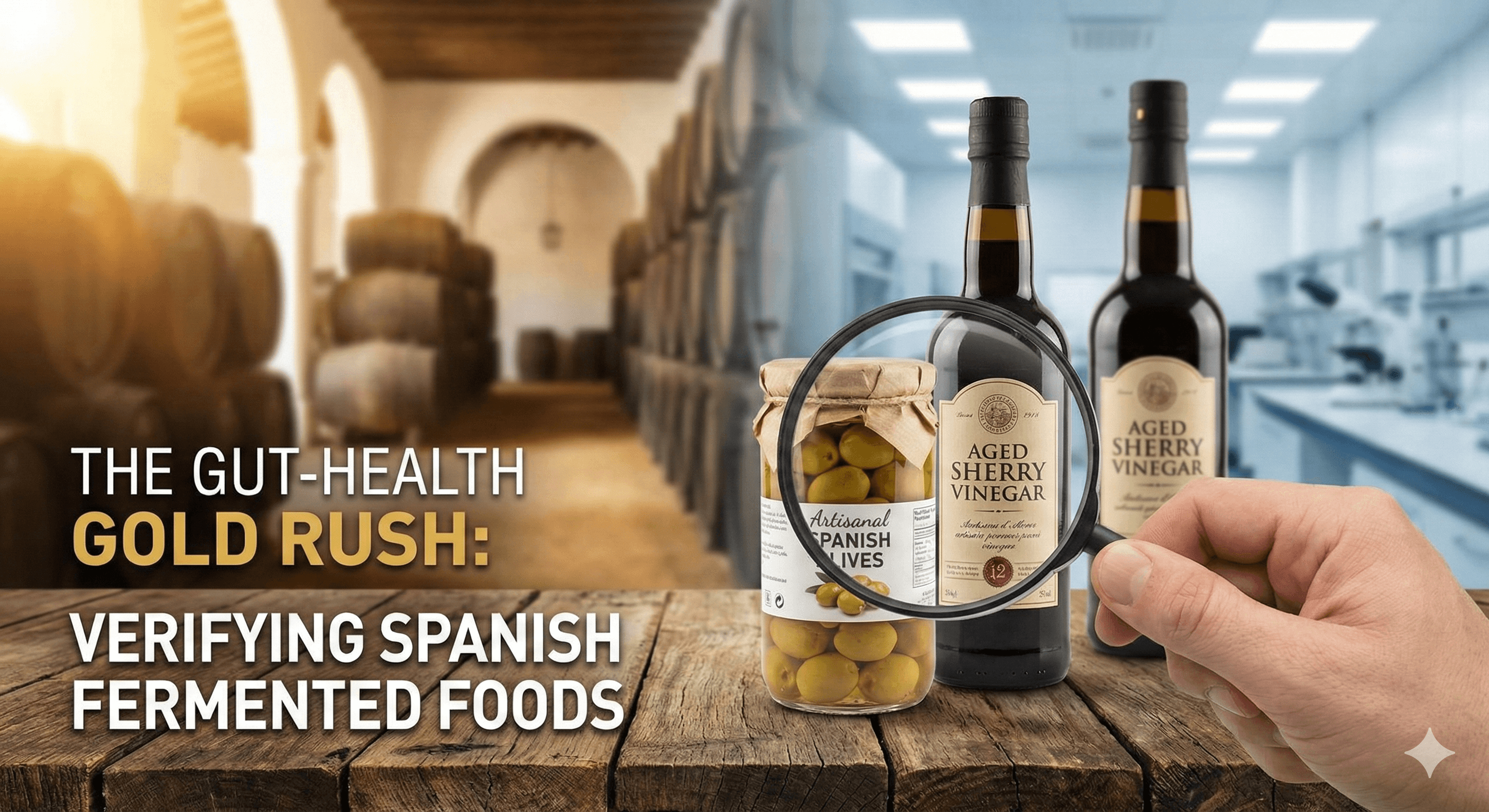
The article advises non-EU buyers of Spanish fermented foods to prioritize on-site verification to ensure product authenticity and quality, mitigating risks associated with long-distance contracts.
- Global fermented food market is expanding due to gut-health trends.
- Asia-Pacific and North America are leading market growth.
- Spain offers unique fermented foods but lacks curated portfolios.
- Non-EU buyers face challenges verifying origin and authenticity.
- On-site verification is crucial to avoid costly contract risks.
AMBAEX Market Intelligence
The New Gut‑Health Gold Rush: Why Non‑EU Buyers Need On‑Site Verification for Spanish Fermented Foods
From Probiotic Olives to Sherry Vinegar, the Real Risk Isn’t “Finding Products” – It’s Proving They Are What the Supplier Claims
Executive Summary
The global fermented foods market is expanding fast, fuelled by consumer interest in digestive health, immunity and “natural” probiotics. Recent market estimates put the worldwide fermented foods segment at around USD 259 billion in 2025, with projections of roughly USD 395 billion by 2034, driven largely by gut‑health‑positioned products.
[precedenceresearch](https://www.precedenceresearch.com/fermented-foods-market)Asia‑Pacific and North America lead this growth: Asia‑Pacific alone is expected to account for more than USD 320 billion of fermented‑food value in 2025–26, while the U.S. fermented food and beverage market is forecast to grow from about USD 63 billion in 2025 to over USD 100 billion by early 2030s.
[fortunebusinessinsights](https://www.fortunebusinessinsights.com/fermented-food-market-114382)Spain sits at an attractive crossroads: it is a world reference for table olives, encurtidos, naturally fermented vinegars and PDO‑protected cured meats, yet many of these products are still buried in commodity “pickles”, generic vinegar and deli assortments rather than curated gut‑health portfolios.
[cordis.europa](https://cordis.europa.eu/project/id/243471/reporting)For non‑EU importers, distributors and procurement teams in the US, GCC and Asia, the real challenge is no longer “Can we find Spanish fermented products?”, but “Can we verify origin, process and authenticity before committing to container‑scale contracts at 5,000–10,000 km distance?”.
The Business Trend: Gut Health Is Driving Fermented Food Demand
Multiple market analyses converge on the same picture: fermented foods have moved from niche to mainstream on the back of digestive‑health and immunity claims. One global forecast expects the fermented foods market to grow from about USD 271 billion in 2026 to nearly USD 395 billion by 2034, a CAGR close to 5%.
[precedenceresearch](https://www.precedenceresearch.com/fermented-foods-market)Segments explicitly positioned around probiotics and gut health are leading: one recent study on fermented food and beverage categories reports that probiotic and gut‑health products already account for roughly 46–47% of global fermented food value. At the same time, a separate analysis of the U.S. fermented food and beverage market projects growth from about USD 63.3 billion in 2025 to USD 109.6 billion by 2033, with much of this uplift attributed to probiotics, kombucha‑style drinks and fermented plant‑based items.
[finance.yahoo](https://finance.yahoo.com/news/fermented-food-beverage-market-size-163000573.html)Asia‑Pacific is both a traditional and modern driver: long‑standing cultural consumption of kimchi, miso, natto and fermented vegetables combines with newer, Western‑style “functional” products. Regional data from Fortune Business Insights suggests Asia‑Pacific will hold around 40% of fermented‑food value in the mid‑2020s.
[fortunebusinessinsights](https://www.fortunebusinessinsights.com/fermented-food-market-114382)For B2B buyers, this demand translates into clear portfolio pressure: retailers, e‑commerce platforms and foodservice operators in the US, GCC and Asia are looking for credible, shelf‑ready fermented products that can sit under “gut health”, “microbiome support” and “Mediterranean diet” narratives—without adding regulatory or brand‑risk exposure.
The Spanish Opportunity: Fermented Foods That Fit Gut‑Health Assortments
Spain is already a core origin in several fermented categories that map naturally to gut‑health‑aligned portfolios, even if they are not always marketed that way.
1. Naturally Fermented Table Olives and Encurtidos
European research recognises fermented table olives as a “health‑promoting” component of the Mediterranean diet thanks to their content of polyphenols, fibre and other bioactive compounds. Projects funded under the EU’s Cordis framework have specifically explored Spanish‑style fermented olives as functional foods capable of carrying probiotic lactic‑acid bacteria without compromising sensory quality.
[pmc.ncbi.nlm.nih](https://pmc.ncbi.nlm.nih.gov/articles/PMC7073621/)Industrial data highlight that Spanish‑style green olive fermentation remains the most economically important olive‑processing method globally, with Spain dominating exports of processed table olives. Controlled‑temperature fermentation studies have shown that fine‑tuning brine conditions can shorten fermentation time, improve lactic‑acid bacteria growth and enhance flavour while maintaining firmness.
[ruidera.uclm](https://ruidera.uclm.es/server/api/core/bitstreams/449e8352-ff4a-41d8-8a36-33d5faa7d205/content)2. Sherry Vinegar and Other Naturally Fermented Vinegars
Spain also leads in protected designation of origin (PDO) vinegars such as Vinagre de Jerez, where regulations require production by acetic fermentation of Sherry wines within a defined geographical area and ageing in oak, preserving a clear fermentation lineage and traceability.
Global vinegar market analyses increasingly cite “naturally fermented vinegars” as a component of the broader fermented‑foods and gut‑health trend, with consumers looking for minimally processed acidity sources to replace synthetic acetic acid or low‑grade, caramel‑coloured vinegars.
[coherentmarketinsights](https://www.coherentmarketinsights.com/industry-reports/fermented-foods-market)3. Traditional Fermented and Cured Meats
Spain’s cured meats (chorizo, salchichón, lomo embuchado) are not “probiotic” in the strict sense, but they are produced through controlled fermentation and drying regimes that shape texture, flavour and safety. Scientific work on Spanish fermented sausages documents the influence of lactic‑acid starter cultures on pathogen control and flavour development, underscoring the importance of process discipline in what many consumers perceive as “traditional” products.
[pmc.ncbi.nlm.nih](https://pmc.ncbi.nlm.nih.gov/articles/PMC7073621/)For non‑EU buyers building “gut‑health plus indulgence” portfolios, these categories sit naturally alongside Greek yoghurt, kefir, kimchi and kombucha—but sourcing them safely at scale demands a different kind of due diligence.
The Risk: When High‑Margin Fermented Foods Become Fraud Targets
High‑value, health‑positioned categories are predictable targets for fraud and corner‑cutting. Olive oil is already a well‑documented example, with EU alert systems and investigations in Spain and Italy uncovering adulterated and mislabelled oils.
[foodsafetynews](https://www.foodsafetynews.com/2023/12/spanish-and-italian-investigators-uncover-olive-oil-fraud/)The same structural pressures increasingly apply to fermented products:
- Fake origin and PDO misuse: Monitoring by EU authorities shows that mislabelling of origin and misuse of geographical indications remain among the most common non‑compliance types in olive‑derived products, including oils and olives. Similar patterns are emerging in vinegars and wines, where products marketed as “Sherry vinegar” or “Rioja vinegar” may not meet PDO requirements. [theguardian](https://www.theguardian.com/world/article/2024/jul/29/olive-oil-fraud-mislabelling-cases-record-high-eu)
- Shortcut fermentation and low‑grade vinegars: As demand for “natural” vinegars grows, there is a clear incentive to blend genuine barrel‑aged vinegars with industrially produced acetic acid or low‑quality wine vinegar to hit price points, while maintaining premium positioning.
- Over‑processed “fermented” meats: In cured meats, economic pressure can lead to heavily accelerated processes, excessive use of additives or partial substitution of pork with cheaper meats—risking both safety and label compliance.
- Documentation‑only probiotics: Research on probiotic table olives has highlighted that achieving viable counts of beneficial bacteria at end‑of‑shelf‑life requires tight process control; without on‑site verification, it is easy for “probiotic” claims to rest on outdated validation or generic lab studies rather than current production reality. [cordis.europa](https://cordis.europa.eu/project/id/243471/reporting)
At container scale, these weaknesses are not academic. A single 20‑ or 40‑foot shipment of mislabelled fermented products can trigger:
- Border rejections or detentions for mislabelling or non‑compliance.
- Forced re‑labelling or destruction at destination, with costs often borne by the importer.
- Brand damage if “gut‑health” or “Mediterranean diet” claims are challenged by regulators or media.
The Trap Door: Your Real Problem Isn’t Finding Products
Most non‑EU buyers start their Spanish fermented‑foods journey with the same stated problem: “We need to find the right products and suppliers.”
In reality, the bigger problem—especially when you are buying from the US, GCC or Asia—is not discovery, but verification at distance.
At 5,000–10,000 km away, you cannot easily see:
- Whether “naturally fermented” olives are genuinely fermented in brine, or partly heat‑treated and acidified to save time and cost.
- Whether a vinegar marketed as “Sherry” meets PDO rules on origin, fermentation and ageing, or is a blend of generic wine vinegars with caramel and aroma.
- Whether a supplier’s “probiotic” olives or vegetables have been validated against current production runs—or only in pilot batches for marketing purposes.
- Whether environmental and labour claims hold up under scrutiny, particularly for retailers and platforms exposed to EU, UK or North American due‑diligence expectations.
Put simply: your main risk is not failing to fill a catalogue; it is locking in container‑level commitments on products that you cannot defend, technically or legally, if something goes wrong.
Why On‑Site Verification in Spain Is Non‑Negotiable for Serious Buyers
For procurement teams building fermented‑food lines from Spain, robust on‑site verification is less a “nice‑to‑have” and more a pre‑condition for sustainable growth in gut‑health portfolios.
What On‑Site Verification Should Cover
- Process and fermentation controls: Check how brines are managed, whether temperatures are controlled, and how starter cultures—if used—are dosed and monitored. Studies on Spanish‑style olives show that even moderate temperature control can materially improve fermentation speed and consistency. [ruidera.uclm](https://ruidera.uclm.es/server/api/core/bitstreams/449e8352-ff4a-41d8-8a36-33d5faa7d205/content)
- Traceability and PDO/PGI compliance: Validate that any PDO claims (e.g., “Vinagre de Jerez”) are backed by registry entries, control‑board documentation and matching production records, not just label artwork.
- Analytical and microbiological testing: Ensure that physico‑chemical parameters (acidity, salt, pH) and microbiological profiles align with the product positioning (e.g., presence/absence of specific probiotic strains, absence of pathogens).
- Packaging and shelf‑life validation: Verify that the packaging format, closure systems and storage conditions support the claimed shelf‑life in your destination market’s climate and logistics chain.
- Documentation for destination regulators: Cross‑check labels, claims and technical dossiers against the requirements of FDA, CFIA, FSSAI, SFDA or other relevant authorities, depending on your market.
How Independent Second‑Party Audits Help
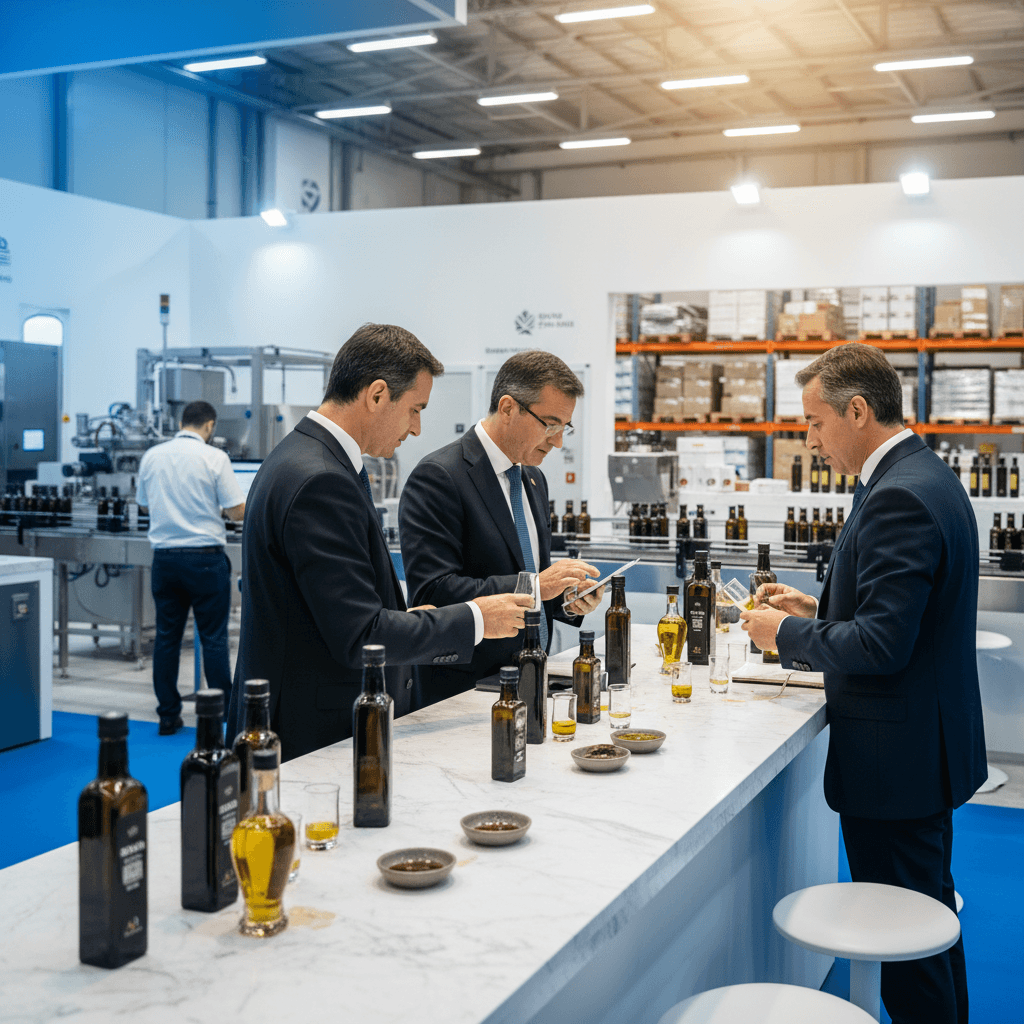
Independent second‑party audits, executed by a buyer‑side partner with physical presence in Spain, allow you to:
- Separate true producers from brokers and traders.
- Validate process and documentation without relying solely on supplier‑provided evidence.
- Build a documented risk profile for each plant and product, which can be shared with your internal quality, regulatory and legal teams.
- Negotiate from a position of knowledge, adjusting price, volumes and contract terms according to verified capability rather than marketing promises.
Planning a Spanish Fermented Foods Project?
The fermented‑foods boom is real: gut‑health‑driven demand is expanding, Spain has the products, and buyers in the US, GCC and Asia are under pressure to deliver differentiated, credible assortments.
But in categories exposed to fraud, mislabelling and technical shortcuts, the real competitive edge won’t come from who finds Spanish fermented products first—it will come from who verifies them best before the first container leaves port.
Planning a Spanish fermented foods project? Make sure your next step isn’t a leap of faith.
info@ambaex.com | ambaex.com/contact
Zero Kickbacks. Physical Verification in Spain, Portugal and Italy. Your Procurement Intelligence Partner for Fermented Foods.