AMBAEX · FOOD SOURCING · SUSTAINABILITY INTELLIGENCE
The Guardian of the Black Diamond: The Essential Role of Dogs and Sustainability in Truffle Hunting
In the world of high-end gastronomy, the journey from the soil to the Michelin-starred table is as much an art form as the cooking itself. The "hunt" for the black truffle is not a simple harvest; it is a regulated, sustainable ritual that relies on a unique partnership between humans and trained dogs.
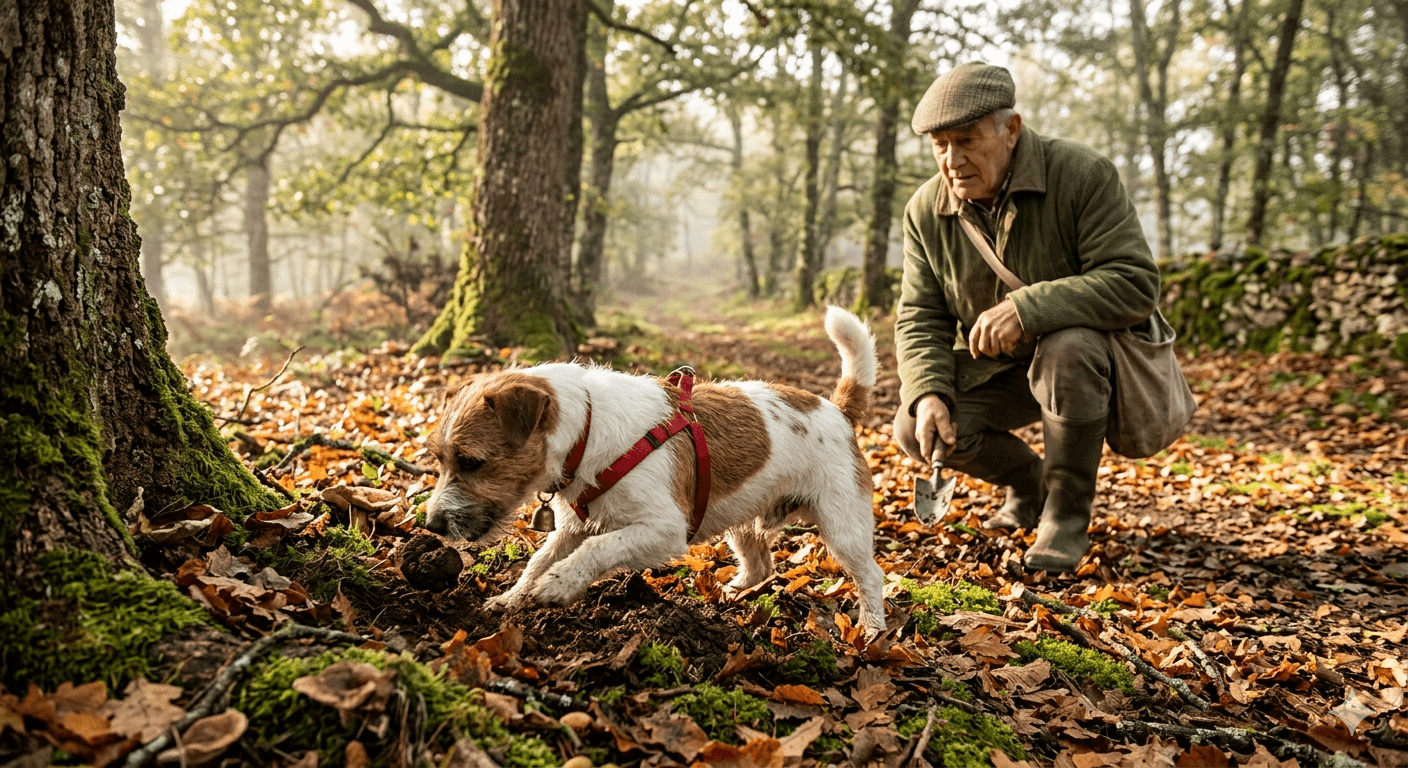
A common misconception is that truffles are simply "dug up." In reality, the truffle is discovered, not uprooted. Professional hunters in regions like Aragon follow a strict, almost ritualistic process designed to protect the underground ecosystem.
The journey from the soil to the table is a testament to centuries of knowledge passed down through generations, combined with modern sustainability practices that ensure this natural treasure remains available for generations to come.
The Art of Discovery, Not Extraction
Professional truffle hunters operate on a principle of minimum impact. Unlike mechanical methods such as raking—which is widely criticized for being site-degrading and producing immature, scentless specimens—trained dogs offer a precise, selective approach.
Key elements of the sustainable harvest include:
- 🐕 Precision Harvesting: Dogs mark the exact spot where a truffle is hidden, allowing the hunter to extract the fungus delicately using a specialized truffle machete (vanghetto). This targeted approach avoids disturbing the surrounding mycelial network.
- 🌍 Caring for the Land: After extraction, the hunter carefully replaces the soil to ensure the mycorrhizal cycle repeats and the "gift of nature" continues to flourish year after year. The relationship between tree roots and truffle mycelium is preserved for future harvests.
- 📅 Sustainability Regulations: To ensure the longevity of the resource, harvesting is strictly limited to the official season (typically mid-November to mid-March) and prohibited at night to prevent environmental disruption. These regulations are enforced by regional authorities across Spain, France, and Italy.
This careful approach transforms truffle hunting from extraction into stewardship—a model where humans work with, rather than against, the natural ecosystem.
The Role of the Dog: Ensuring Peak Maturity
The dog is the most critical player in the sustainability chain. Unlike mechanical methods that indiscriminately disturb the soil, trained dogs possess a remarkable ability: they only mark truffles that have reached full maturity.
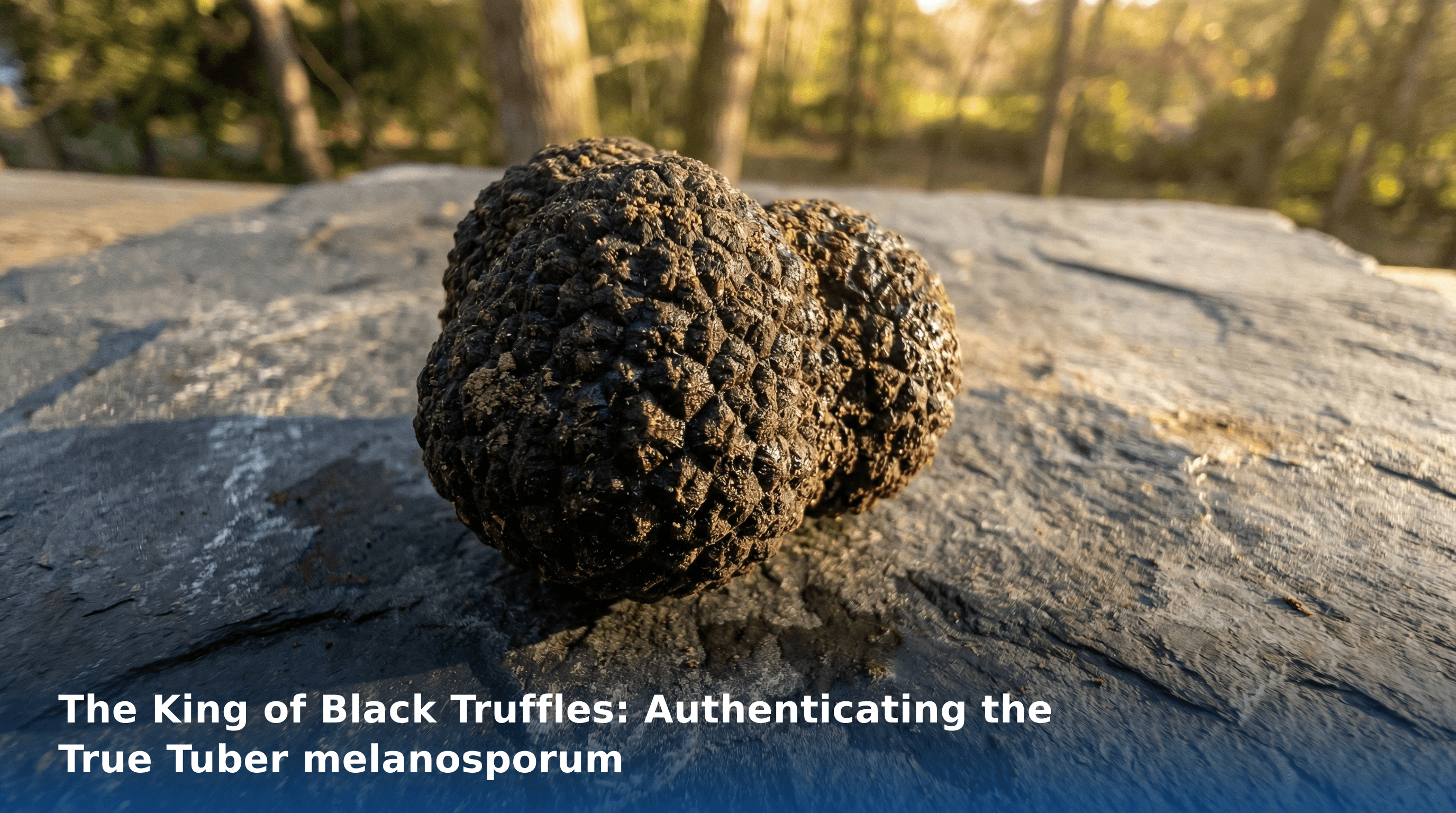
Why does this matter? Only a mature truffle produces the 100+ aromatic compounds that create its legendary, penetrating scent—the complex bouquet of dimethyl sulfide, aldehydes, and esters that defines Tuber melanosporum. Immature truffles lack this aromatic complexity and, if harvested, would represent a waste of the resource.
By using dogs, farmers guarantee that they are only removing product at its gastronomic peak, leaving immature specimens in the ground to develop into future harvests. This selective approach is the foundation of truffle sustainability.
The Truffle Hunter's Best Friend: Preferred Breeds
While several breeds excel at truffle detection, each brings unique strengths to the hunt:
- 🐕 Lagotto Romagnolo: Perhaps the most acclaimed truffle breed, this Italian water dog is genetically predisposed to scent work. Its dense, water-resistant coat protects it during long hunts, and its receptive, eager-to-please nature makes it exceptionally trainable for the precise work of truffle detection.
- 🦮 Labrador Retriever: Prized for its intelligence, stamina, and gentle mouth. Labradors are excellent for long hunting days and can be trained to indicate truffles without damaging them.
- 🐩 Brittany Spaniel: Known for its endurance and resistance during extended hunts, the Brittany combines scenting ability with the stamina needed to cover large truffle grounds.
- 🐕 Dachshund: Despite its small size, the dachshund possesses an excellent sense of smell and a determined nature that makes it surprisingly effective at locating buried truffles, particularly in tighter forest terrain.
The bond between hunter and dog is central to the tradition—a partnership built on trust, training, and mutual respect that has sustained truffle culture for centuries.
A Model for Sustainable Agriculture
Truffle farming is increasingly recognized as a complementary activity of sustainable agriculture. Across Europe, 90% of truffle farmers are small owners who prioritize environmental respect and help establish populations in rural areas.
This "green revolution" transforms poor, calcareous soils into high-value ecosystems without the need for intensive chemical interventions. Truffle plantations (truffières) provide multiple benefits:
- 🌱 Soil Regeneration: The mycorrhizal association between truffle fungi and host trees (typically holm oaks, kermes oaks, or hazelnuts) improves soil structure and organic matter.
- 💧 Water Efficiency: Truffle cultivation often uses drip irrigation systems that minimize water waste while ensuring optimal growing conditions.
- 🏡 Rural Revitalization: As seen in Aragon's Sarrión region, truffle farming has reversed depopulation, created sustainable incomes, and preserved traditional land management practices.
- 🌳 Biodiversity Protection: Truffle orchards provide habitat for wildlife and maintain forest cover on land that might otherwise be abandoned or converted to intensive agriculture.
By combining ancient tradition with modern science, the truffle industry is proving that luxury and ecological preservation can go hand-in-hand. Research into mycorrhizal inoculation, soil management, and sustainable harvesting continues to refine these practices.
Toward a True "Sabor de Verdad"
For the modern professional—chef, importer, or serious gourmet—the truffle is more than just an ingredient; it is a symbol of authenticity. A true "Sabor de Verdad" (Taste of Truth) encapsulates:
- 🌍 The soul of the land: Terroir expressed through the unique limestone soils of Aragon, Périgord, or Alba
- 👨🌾 The patience of the farmer: Years of waiting for mycorrhizal seedlings to mature into productive orchards
- 🐕 The quiet effort of a dog: The partnership that ensures only mature, aromatic truffles reach the market
- 📜 Respect for tradition: Harvest methods passed down through generations, now supported by scientific understanding
When you source truffles from producers who follow these principles—using trained dogs, respecting seasonal windows, and prioritizing soil health—you are not just buying an ingredient. You are investing in a sustainable model that protects both the resource and the rural communities that depend on it.
Ready to Source Sustainable, Authentic Black Truffles?
Ambaex helps international buyers connect with verified truffle producers in Spain, Portugal, and Italy who follow sustainable harvesting practices, use trained dogs, and provide full traceability. Let us help you bring true Tuber melanosporum to your supply chain.