This article advises non-EU buyers on leveraging Alimentaria 2026's Olive Oil Bar to source reliable, high-quality Spanish extra virgin olive oil (EVOO) suppliers for large-scale partnerships.
- Spain is the world's largest olive oil producer.
- Alimentaria 2026's Olive Oil Bar showcases top Spanish EVOOs.
- Spanish EVOO offers scale, diverse terroirs, and technical expertise.
- Spain provides various price points and quality tiers.
- Spanish producers innovate with cold-extracted and speciality EVOOs.
AMBAEX Market Intelligence
Spanish Extra Virgin Olive Oil: Why Serious Non‑EU Buyers Should Pay Attention to The Olive Oil Bar at Alimentaria 2026
How to Scout, Verify and Secure High‑Quality EVOO Suppliers in Southern Europe—Beyond the Trade‑Show Tasting Glass
Executive Summary
Spanish extra virgin olive oil (EVOO) has moved from a Mediterranean staple to a global strategic product: for retail, foodservice, health‑focused brands and private labels that want traceable, premium fats instead of commodity oils.
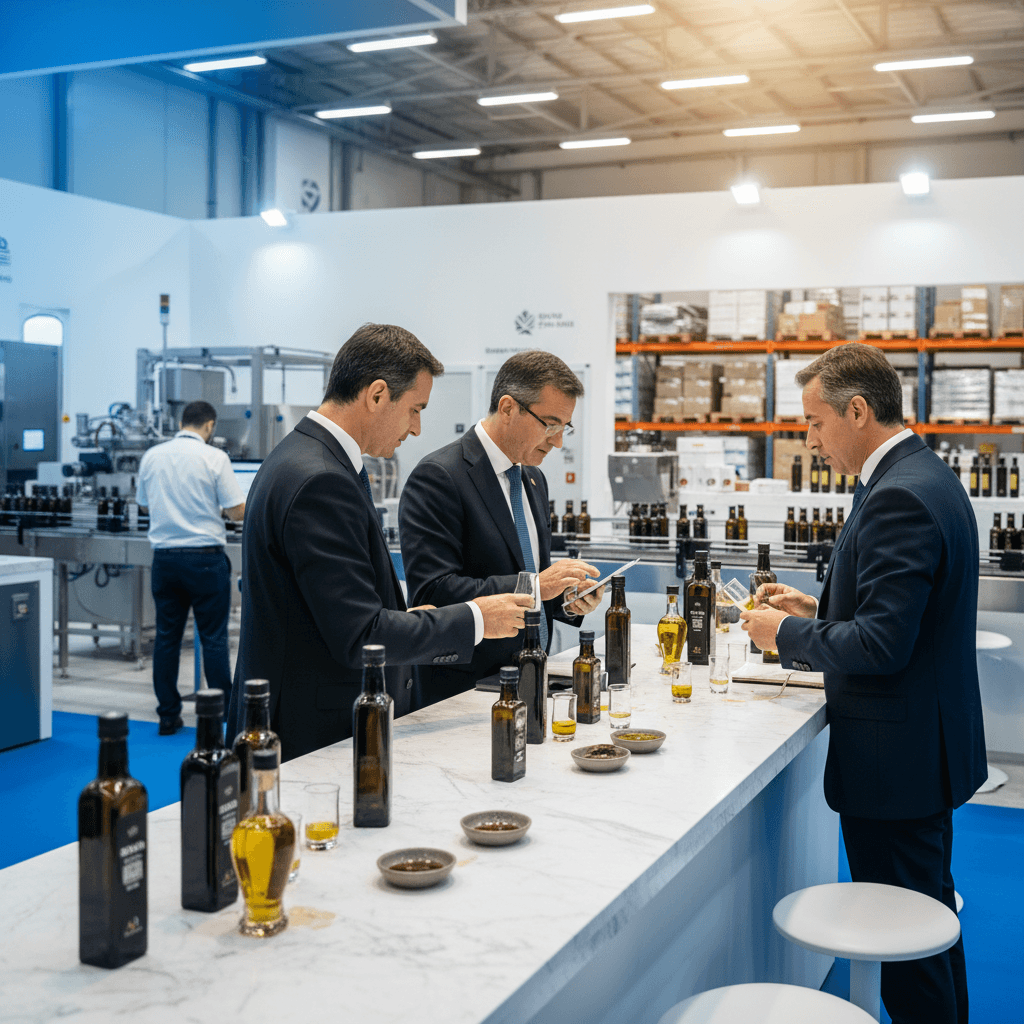
Alimentaria 2026’s Olive Oil Bar, with more than 100 carefully curated references organised by production type and innovation, is effectively a live showroom of Spain’s best EVOO—but it is only the starting point for non‑EU buyers who need reliable, large‑scale partners.
The core challenge for importers and brand owners outside the EU: how to turn a few days of tastings and conversations in Barcelona into verified, compliant and competitively priced supply relationships that can withstand real‑world volumes and audits.
Why Spanish EVOO Matters for Non‑EU Buyers
Spain is consistently the world’s largest olive oil producer, often accounting for more than one‑third of global output in a normal harvest year, and is the key origin behind many “Mediterranean” blends sold worldwide.
For importers, distributors and retailers in the GCC, MENA, Asia‑Pacific and the Americas, Spanish EVOO offers a combination that is difficult to match: scale, diversity of terroirs and varieties, strong technical know‑how and a maturing ecosystem of certified organic and speciality products.
Strategic Advantages of Sourcing in Spain
- Depth of supply: a broad base of cooperatives, mills and vertically integrated brands means you can match different price points, quality tiers and packaging formats from a single origin.
- Innovation on top of tradition: Spanish producers are moving beyond bulk tanker shipments into cold‑extracted, early harvest, monovarietal and flavoured/smoked EVOOs that support premium and niche positioning in non‑EU markets.
- Regulatory maturity: EU and Spanish rules on labelling, origin, fraud control and quality classes (EVOO, virgin, lampante) give buyers a strong framework—if they work with suppliers who actually respect it.
Inside The Olive Oil Bar: Reading the Layout Like a Buyer
Alimentaria’s Olive Oil Bar is more than a nice tasting corner; it’s a filtered map of the Spanish EVOO landscape, organised in a way that helps serious buyers think in segments instead of individual samples.
The Three Zones—and What They Mean for You
- Conventional Production EVOO: extra virgin olive oils in glass or metal tins, with no lower‑quality categories and no plastic packaging. This is the core sourcing zone for mainstream and upper‑mainstream retail and foodservice SKUs where quality and shelf image both matter.
- Organic Production EVOO: oils certified under the official EU Organic Farming scheme, again presented in glass or metal. This area is particularly relevant for buyers serving organic retailers, health‑focused e‑commerce and premium hospitality.
- Speciality EVOO: flavoured or technically differentiated oils—infused with herbs, spices or fruits, or produced with special techniques such as smoke—where EVOO remains the main ingredient but delivers added sensory value. These are ideal for gift lines, gourmet ranges and high‑margin menu items.
For a non‑EU buyer, this structure is a built‑in segmentation tool: it lets you shortlist producers based on your positioning (mass premium, organic, gourmet) before you even walk the stands.
How AMBAEX Scouts Spanish Olive Oil Suppliers for Non‑EU Buyers
Tasting at The Olive Oil Bar is the visible tip of the iceberg; what matters for your business is what happens back at the mill: harvesting practices, blending, storage, documentation and export readiness.
The way to extract real value from Alimentaria is to connect the curated product display with disciplined supplier scouting and verification on the ground in Spain.
Step 1: Pre‑Fair Targeting and Brief
- Define your segments: conventional, organic and/or speciality EVOO, with target price bands, volumes, packaging formats and brand strategy (private label vs brand partner).
- Map the Olive Oil Bar references to those segments and build a shortlist of producers and cooperatives whose products and certifications match your brief.
- Prepare technical and commercial questions in advance (acidity, peroxide values, sensory panel results, export experience to your region, bulk vs retail capability).
Step 2: On‑Site Scouting at Alimentaria
- Visit stands of shortlisted producers, not just taste tables; collect technical sheets, certifications (PDO/PGI, organic, quality, sustainability), and discuss volumes and lead times.
- Distinguish between true producers and intermediaries; clarify mill ownership, control over fruit sourcing and who actually fills and labels your product.
- Capture structured notes and photos so post‑fair comparisons are based on data, not “I liked this bottle”.
Step 3: Post‑Fair Supplier Verification in Spain
- Conduct second‑party audits at mills and packing facilities to check harvesting and milling practices, traceability, storage conditions and documentation systems.
- Validate that product quality at the mill matches what you tasted at Alimentaria, including consistency across batches and the coming campaign.
- Assess export readiness: ability to meet your labelling, carton, palletisation and documentation requirements (including halal/vegetarian icons, language versions and destination‑market rules).
Benefits for Non‑EU Buyers: Beyond Price per Litre
The goal is not simply to “buy cheaper Spanish EVOO” but to reduce the total risk and cost of operating a stable, differentiated olive‑oil line in your home market.
Done properly, structured scouting and verification around The Olive Oil Bar translates into concrete advantages for importers and brand owners.
Commercial and Operational Upside
- Better product‑market fit: by using the three zones (conventional, organic, speciality) as a framework, you avoid mismatches between what your customers expect and what the mill actually produces best.
- More predictable quality: on‑site verification of milling, storage and blending practices reduces the risk of season‑to‑season surprises in flavour, colour or analytical parameters.
- Stronger brand story: working directly with mills in specific regions gives you authentic origin narratives (Jaén, Baena, Priorat, Les Garrigues, etc.) that support premium positioning.
- Negotiating leverage: understanding the real capacity and constraints of multiple producers lets you negotiate better prices, volumes and exclusivities without being locked into a single supplier too early.
Risk Reduction and Compliance
- Lower fraud exposure: independent checks on blending, origin and documentation help protect you from adulteration, mislabelling and origin fraud, which are recurring issues in the global olive‑oil trade.
- Alignment with your regulators: verifying EU documentation and labels against your market’s rules (e.g. language, nutrition, claims, religious or dietary icons) before shipping helps avoid port delays and relabelling costs.
- ESG and sustainability signals: many Spanish producers now track water use, biodiversity, carbon and labour practices; site visits allow you to validate these claims rather than repeating marketing slogans.
At Alimentaria 2026: Independent Eyes on Spanish Olive Oil
The Olive Oil Bar will showcase more than 100 extra virgin references in Barcelona—but the real decisions are made back at the mill, not at the tasting counter.
AMBAEX will be present at Alimentaria 2026 and across Spain before and after the fair, scouting mills, visiting facilities and turning promising samples into verified, production‑ready suppliers for non‑EU buyers.
If you plan to use Spanish olive oil in high‑stake retail, foodservice or brand projects, make sure someone you trust has walked the factory floor before you commit.
Coordinate your Alimentaria 2026 olive oil scouting with AMBAEX →
info@ambaex.com | ambaex.com/contact
Zero Kickbacks. Physical Verification. Your Olive Oil Intelligence Partner in Southern Europe.