This article analyzes Southern Europe's emergence as a strategically advantageous and quantitatively justified supply chain hedge against escalating risks and tariffs associated with China-centric sourcing.
- EU anti-dumping duties on Chinese ceramic tiles extended to at least 2029.
- China removing export tax rebates on 249 products from April 2026.
- Half of EU firms report China-based suppliers are shifting production.
- Concentration on a single origin is now structurally more expensive.
- On-site verification is crucial for successful supply chain diversification.
AMBAEX Market Intelligence
Southern Europe: The Numbers-Backed Hedge Your Supply Chain Needs
Why Tiles, Ceramics, and Textiles Buyers Are Diversifying to Spain, Portugal, and Italy—And What Can Go Wrong Without Verification
Executive Summary
Southern Europe is no longer a "nice to have" in a sourcing portfolio. It is becoming a hard, numbers-backed hedge against tariff shocks, capacity risk, and quality failures in China-centric supply chains.
Anti-dumping duties on Chinese ceramic tiles have been renewed until at least 2029. China is removing export tax rebates on 249 products from April 2026. Half of EU firms surveyed say their China-based suppliers are already shifting production elsewhere.
For procurement teams in construction, hospitality fit-out, retail, and technical textiles, the message is clear: concentration on one origin is becoming structurally more expensive and politically riskier.
This article examines why Southern Europe matters now, which product categories make strategic sense, and why on-site verification is the difference between successful diversification and expensive mistakes.
The Policy Shift: Why China-Centric Sourcing Is Getting Riskier
China accounts for approximately 53% of global ceramic tile output. That dominance has triggered a wave of trade defence measures that show no sign of reversing:
- EU anti-dumping duties on Chinese ceramic tiles renewed until at least 2029 — this is long-term policy, not a temporary spike
- GCC states have investigated or imposed similar measures — your Gulf customers face the same pressures
- From April 2026, China removes export tax rebates on 249 products including ceramic roof tiles — reducing Chinese discounting power and changing global price dynamics
Meanwhile, European firms are accelerating their own diversification. A December 2025 EU Chamber of Commerce report found that approximately half of surveyed companies said their China-based suppliers were shifting production to other markets.
For a board or C-suite, this is one message: the total landed cost of Chinese origin is rising, and policy shock risk is structural, not cyclical.
Strategic Product Bets in Southern Europe
Tiles, Ceramics, and Natural Stone
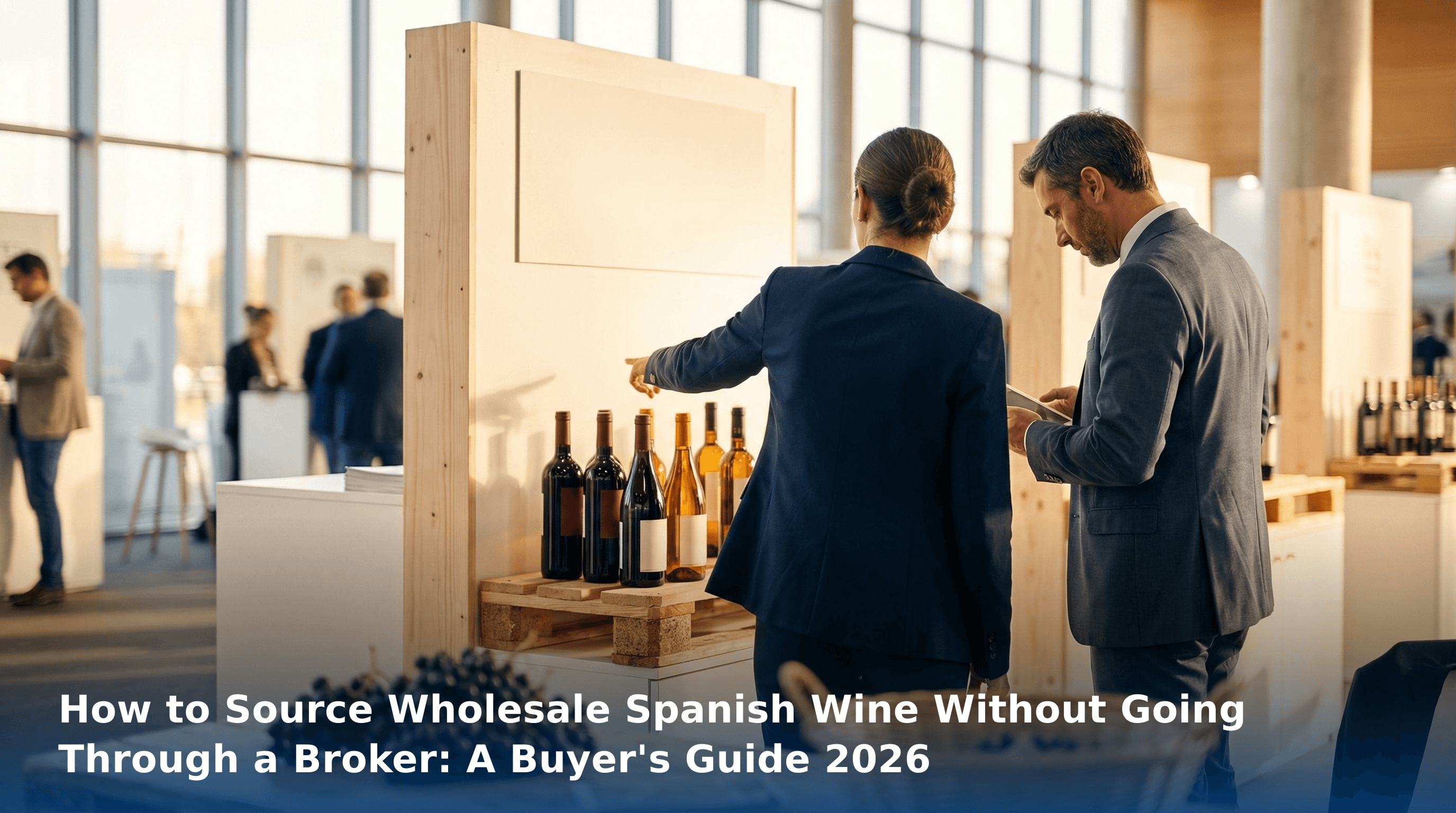
Italy, Spain, and Portugal are among the world's main producers and exporters of ceramic tiles and architectural ceramics, with highly automated plants and recognised design leadership. As anti-dumping duties raise the landed cost of Chinese tiles, importers in Europe, the GCC, and the Americas increasingly look to Southern European producers.
For any organisation dependent on tiles and stone—construction, retail, hospitality fit-out—Southern Europe provides:
- Design and quality that anchors premium positioning — Italian and Spanish tiles command brand premium your customers recognise
- Lower regulatory and dumping-related volatility — EU state support is under tighter scrutiny than Chinese subsidies
- Pricing stability — no sudden rebate removals or tariff shocks mid-contract
Textiles and Technical Fabrics
The EU textiles sector is undergoing structural transformation driven by sustainability requirements and new Product Environmental Footprint rules. This pushes producers toward higher-quality, longer-lasting fabrics and more traceable supply chains.
The market is segmenting clearly:
- Low-cost, low-traceability mass goods — remain centred in Asia, but face growing ESG and tariff risk
- High-quality, regulation-ready textiles — for premium brands, uniforms, hospitality, and medical uses — increasingly sourced from EU suppliers
For buyers, Southern Europe (especially Italy and Portugal) is a rational source when fabric performance, compliance, and brand perception matter more than minimum price—and when tariff and ESG risks threaten long-term contracts with low-cost Asian suppliers.
The Verification Problem: What Goes Wrong Without Boots on the Ground
Here is what the diversification playbooks don't tell you: finding a Southern European supplier is easy. Finding one that can actually deliver to your specifications, at scale, with export documentation that passes Dubai, Jeddah, or Tokyo—that's where deals fail.
Official European audits reveal the gap between "on paper" compliance and operational reality:
- A Food Safety Authority of Ireland audit found 66% of audited businesses had non-compliances
- 58% failed pest control requirements
- 24% failed traceability tests
Broader studies on food safety supply chains highlight recurring issues in documentation, hygiene, and traceability that translate directly into shipment delays, recalls, and reputational damage.
These numbers are from regulated EU markets with strong enforcement authorities. For a foreign buyer adding GCC or APAC export requirements on top of EU baseline, the risk multiplies.
The pattern we see repeatedly in AMBAEX field audits:
- Supplier passes desktop due diligence — business registration valid, website professional, references check out
- On-site visit reveals inadequate capacity, documentation gaps, or quality control that works for local market but fails export standards
- Buyer discovers this after deposit is wired, not before
A supplier can be compliant for Barcelona and non-compliant for Riyadh. Only physical verification answers the question that matters: can they ship to YOUR destination?
The AMBAEX Approach: Verification Before Commitment
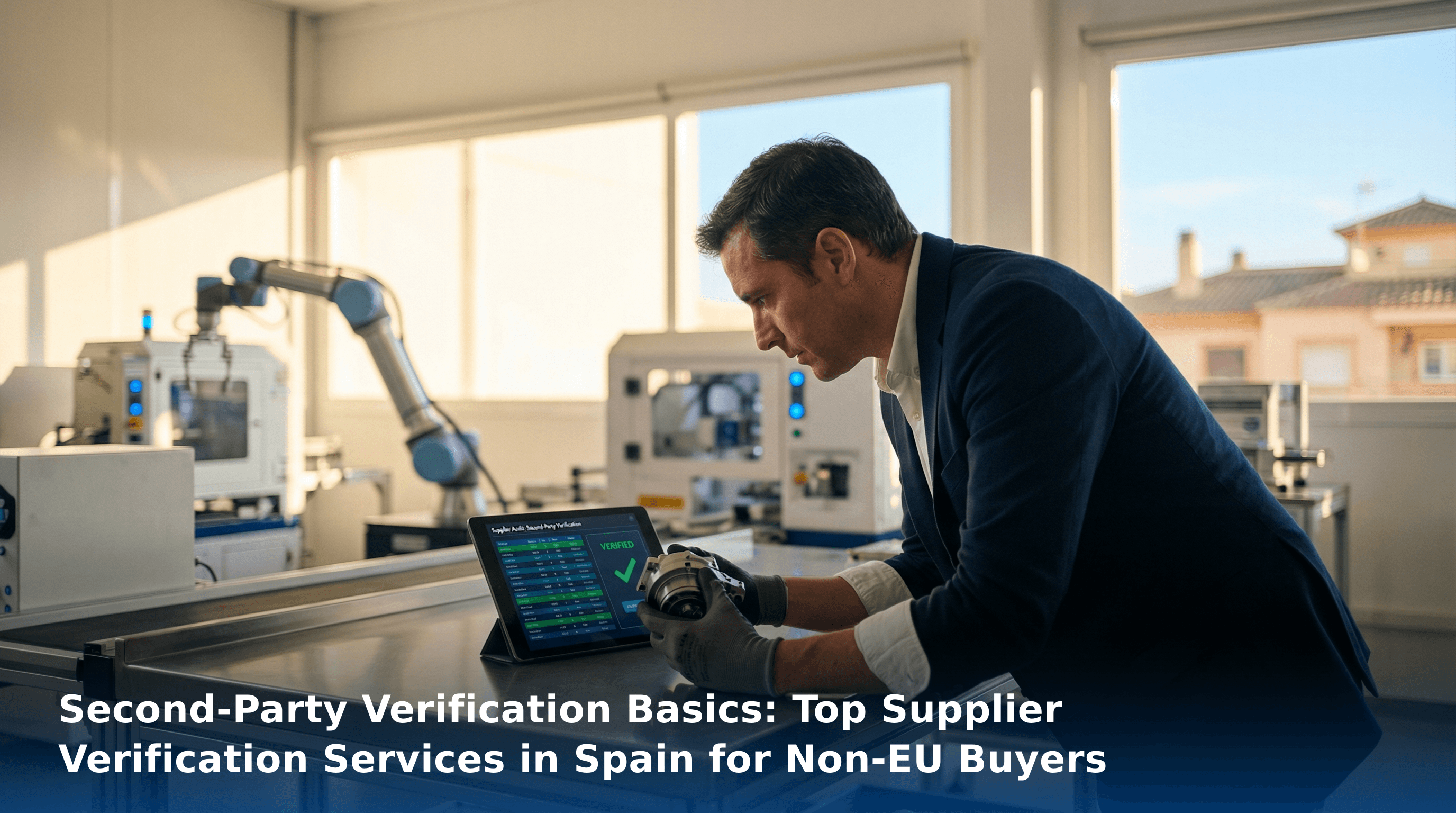
We conduct second-party audits in accordance with ISO 19011:2018 guidelines—structured, risk-based verification of management systems and processes built on principles of integrity, impartiality, and evidence-based conclusions.
On-site work in local language removes the illusion created by websites, price lists, and remote questionnaires. It replaces assumptions with verifiable facts about capacity, quality, and documentation.
What We Verify
| Verification Area | What We Check | Why It Matters |
|---|---|---|
| Production Capacity | Actual output vs. claimed capacity, machinery maintenance logs, workforce levels | Prevents the "we can scale" promise that fails at first real order |
| Quality Systems | QC procedures, rejection rates, calibration records, sample consistency | Ensures what you saw in the showroom matches what arrives in containers |
| Export Documentation | Certificate validity, labelling compliance, customs experience for target markets | Avoids port rejection in GCC/APAC due to documentation failures |
| Financial Stability | Payment terms with their suppliers, inventory turnover, order backlog | Flags cash flow problems that cause delays or quality shortcuts |
You receive a Green Light / Red Light decision, not a data dump. Our job is judgment, not information transfer.
The Fiduciary Difference: Why Zero Kickbacks Matters for Diversification
When you're entering a new sourcing region, you're especially vulnerable to intermediaries who profit from your inexperience. Traditional agents receive commissions from suppliers—creating incentives to recommend whoever pays them, not whoever serves you best.
The AMBAEX model inverts this:
- Zero kickbacks — legally guaranteed via signed No-Kickback Affidavit
- Factory invoices visible to you — you see real pricing, not markup
- Your fee is separate and transparent — no hidden costs buried in product price
- FCPA-compliant and audit-ready — documentation satisfies institutional requirements from Day 1
Direct factory invoicing and transparent fees simplify reconciliation, reduce accrual errors, and support cleaner audit trails. This structure maps cleanly onto segregation-of-duties and anti-bribery controls that internal audit teams already apply.
The Three-Stage Process: Identify, Verify, Execute
"Identify – Verify – Execute" is not a slogan. It is the only way to answer the real question: can this Southern European supplier ship the right product, at the agreed spec, in the required volume, with documents that pass Dubai, Jeddah, or Tokyo—not just Barcelona?
Stage 1: Market Intelligence (Identify)
We don't guess prices; we know them. Local market data, trade show intelligence, and direct factory relationships enable us to build a shortlist of 3-5 verified suppliers matching your exact specifications—material grade, finish quality, MOQ, certifications, export experience to your target market.
Stage 2: AVS Protocol™ (Verify)
We don't trust labels; we audit them. Our Directors deploy to factory sites within five business days. We verify capacity claims, inspect quality systems, review export documentation, and assess financial stability. You receive a Green Light / Red Light recommendation with evidence—not opinion.
Stage 3: Deal Navigator™ (Execute)
We don't assume; we inspect. Once you select a supplier:
- Terms of Contract (TOC) Review: We negotiate payment terms, Incoterms, quality specifications, and penalty clauses on your behalf
- Pre-Shipment Inspection (PSI): Before goods leave Europe, we physically verify every pallet against specifications. We reject non-conforming product before it ships—not after it arrives at your port
- Documentation Package: Complete export documentation, certificate verification, customs coordination—ready for your clearance team
The Strategic Imperative: Diversification Is a Board-Level Decision
For a board or C-suite evaluating supply chain resilience, Southern Europe is not a bet on "Mediterranean charm." It is a rational response to:
- Persistent anti-dumping actions and tariff measures that raise total landed cost of Chinese origin and create ongoing policy shock risk
- Chinese policy changes on export rebates that can suddenly alter global pricing and availability
- EU regulatory pressure on textiles, ceramics, and industrial goods that makes compliant European suppliers structurally safer partners for regulated markets
The question is not whether Southern Europe belongs in your sourcing strategy. The question is whether you will enter the market with verification—or with assumptions.
Ready to Diversify with Confidence?
Book a 30-minute discovery call. No obligation. No pressure.
We'll cover your current concentration risks, which Southern European categories make sense for your business, and whether AMBAEX is the right fit—we're honest if we're not.
contact@ambaex.com | ambaex.com/contact
Zero Kickbacks. Physical Verification. Fiduciary Integrity.