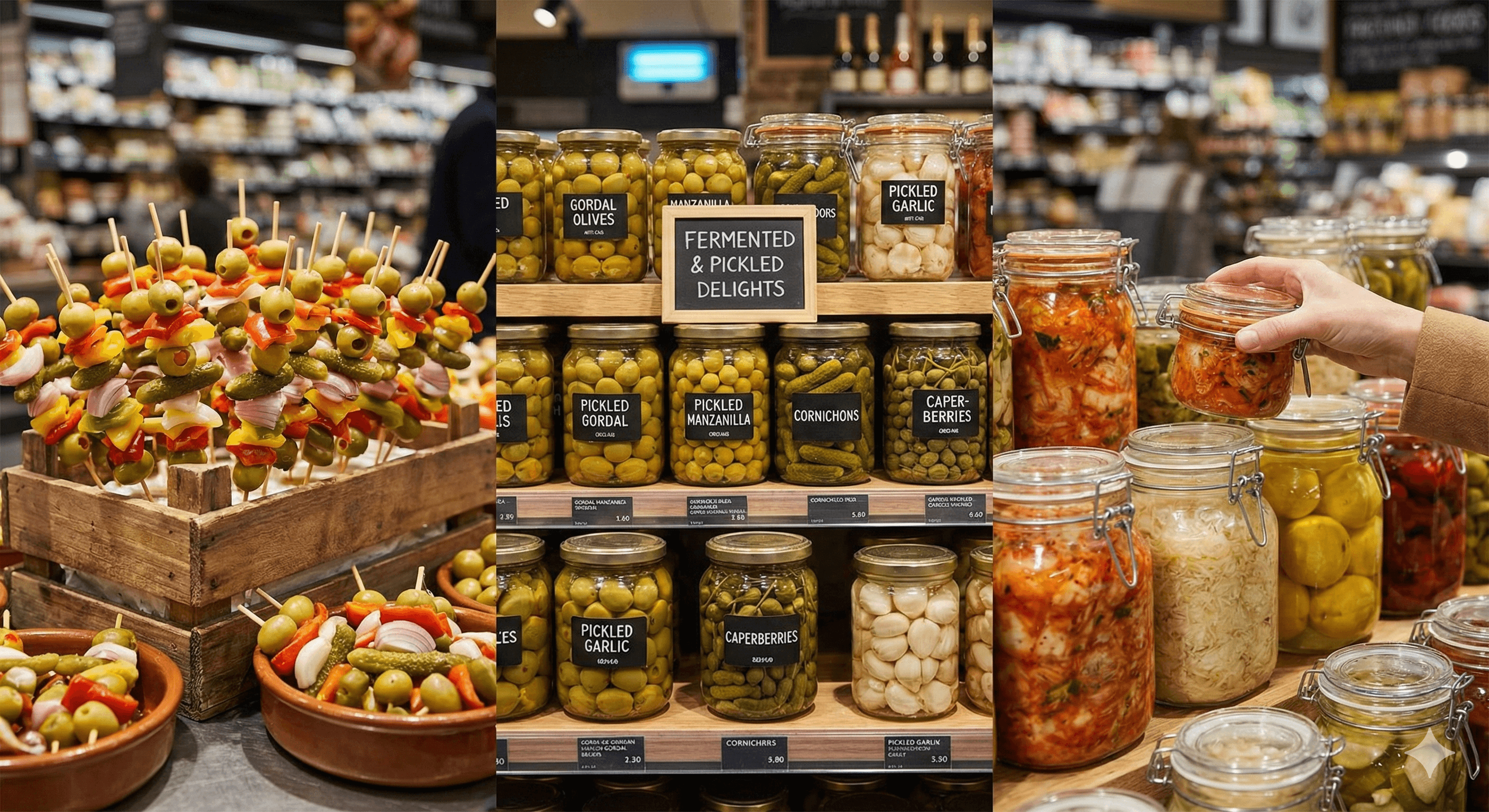
This article advises non-EU buyers on sourcing authentic Spanish fermented foods like Sherry Vinegar PDO, piparras, and cured meats, emphasizing PDO verification to mitigate risks of counterfeits and ensure quality.
- Demand surges for gut-health foods and authentic Mediterranean flavors globally.
- Sherry Vinegar PDO guarantees origin and traditional production methods.
- Non-EU buyers face risks from fake products lacking PDO status.
- Verify PDO/DOP status to protect brand, margins, and regulatory compliance.
- Structured supplier screening and on-site audits are crucial in Spain.
AMBAEX Market Intelligence
Sherry Vinegar, Piparras & Fermented Meats: How Non‑EU Buyers Can Secure Authentic “Live Culture Heritage” Supply from Spain
A Portfolio Playbook and Risk Lens for Category Managers in the US, GCC and Asia
Executive Summary
Spain’s fermented and acid‑preserved foods—Vinagre de Jerez (Sherry Vinegar), piparras, banderillas, capers and fermented sausages—sit at the intersection of two powerful trends: demand for gut‑health‑aligned “live culture” foods and a global appetite for authentic tapas and Mediterranean flavours.
For non‑EU buyers building premium retail and HORECA ranges, the opportunity is clear: combine legally protected heritage products like Sherry Vinegar PDO with region‑specific peppers and fermented meats to create credible “live culture heritage” assortments.
The risk is equally clear: outside Spain, markets are flooded with “Sherry‑style” vinegars without PDO status, generic pickled peppers branded as “Basque” without origin proof, and fast‑processed meats presented as “artisanal charcuterie” with little evidence behind the story.
To protect margin, brand and regulatory exposure, non‑EU buyers do not just need product lists; they need structured supplier screening and someone walking the plants in Spain, checking PDO/DOP references, fermentation records and export readiness on their behalf.
The Heritage Framework: What “Sherry Vinegar PDO” Really Means
Vinagre de Jerez is not a marketing phrase; it is a protected designation of origin under EU law. The Spanish PDO specification and the Consejo Regulador define it precisely: it must be produced in the Sherry Triangle (Jerez de la Frontera, El Puerto de Santa María and Sanlúcar de Barrameda), using wines authorised for Sherry, acetically fermented and aged in oak using traditional criaderas and solera systems.
Only producers registered with the Regulatory Council and subject to its controls can legally market their products as “Vinagre de Jerez” with PDO seals and ageing categories (e.g., Reserva, Gran Reserva).
For non‑EU buyers, this has two implications:
- PDO Sherry Vinegar carries built‑in traceability: vineyard zone, base wine, method of fermentation and ageing are all regulated and audited.
- Products labelled “Sherry vinegar” or “Sherry‑style vinegar” without PDO status may use cheaper base wines, limited ageing or blended origins while trading on the reputation of Jerez.
Product Fit: Building “Live Culture Heritage” Tapas Ranges
Spanish ferments and acid‑preserved items lend themselves naturally to tapas‑style, gut‑health‑adjacent ranges for retail and HORECA in the US, GCC and Asia.
1. Sherry Vinegar and Other Wine Vinegars
- Sherry Vinegar PDO: authentic, barrel‑aged vinegar with deep aromatic complexity, ideal for dressings, marinades and high‑end gastronomy; strong story around terroir and ageing.
- Other wine vinegars: Rioja, Cava or generic wine vinegars, which can complement the range but should be clearly distinguished from PDO Sherry Vinegar.
2. Piparras, Banderillas and Capers
- Piparras: mild, slender green peppers traditionally grown and processed in northern Spain (Navarra/Basque Country), often naturally fermented or acid‑preserved and served as “gildas” with olives and anchovies.
- Banderillas: skewers combining olives, piparras, pickled onions, gherkins and sometimes seafood or cured meats; ready‑to‑serve tapas with clear “live culture heritage” appeal when based on genuine fermented components.
- Capers and caperberries: salt‑cured or brined flower buds and fruits used throughout Mediterranean cuisine, which can be positioned as part of a fermented/tapas vegetable set.
3. Fermented and Cured Meats
- Traditional sausages: chorizo, salchichón and other fermented sausages rely on controlled LAB fermentation and drying; their process underpins both flavour and safety.
- Regional specialities: protected names (e.g., some chorizos or hams with PGI/PDO) bring an extra layer of traceability and story for premium assortments.
Curated in combination, these products let buyers create coherent, premium “Spanish live culture tapas” ranges that link fermentation, heritage and flavour—if the underlying suppliers are authentic.
Risk & Fraud: What Non‑EU Buyers Need to Watch For
As with olive oil, heritage and high margin attract opportunists. Investigations in Spain and Italy continue to uncover mislabelled olive oils and other Mediterranean products, with EU alerts recording record numbers of fraud and mislabelling cases in recent years.
Patterns to watch in “live culture heritage” categories include:
- “Sherry‑style” vinegar with no PDO: wine vinegar coloured and flavoured to mimic Sherry Vinegar, sometimes with generic “Sherry” references on label artwork but without PDO seals, Regulatory Council numbers or documented ageing.
- Generic peppers sold as Basque piparras: peppers grown and processed outside traditional regions, packed with Basque‑style imagery and naming, yet lacking any PGI link or traceability to recognised production zones.
- Speed‑processed meats sold as fermented charcuterie: products that rely heavily on additives, smoke flavour and short drying times, but are marketed as “artisanal fermented sausage” or “slow‑cured”, without fermentation logs to back the claim.
- “Tapas” packs built from lowest‑cost components: banderillas assembled from commodity olives and pickles that bear no relationship to the premium story you want to tell in US, GCC or Japanese markets.
At scale, these shortcuts hit your P&L and brand, not just your supplier’s margin: misrepresented PDO, PGI or “artisanal” claims can trigger label changes, de‑listings or scrutiny from regulators and trade partners.
From Product List to Plant Reality: A Portfolio and Risk Playbook
To move from attractive Spanish product lists to defendable, profitable “live culture heritage” portfolios, category and sourcing managers should combine a portfolio view with a risk lens.
1. Define Your Portfolio Architecture
- Tier 1 – Heritage anchors: Sherry Vinegar PDO, selected regional piparras, PGI/PDO cured meats. These are your story and margin cores.
- Tier 2 – Supporting ferments: high‑quality, non‑PDO vinegars, olives, encurtidos and capers that complement Tier 1 while keeping price points accessible.
- Tier 3 – Commodity fillers: basic pickles and generic vinegars where you compete on price but maintain baseline quality and safety.
2. Attach a Risk Profile to Each Tier
- Tier 1: highest marketing value and fraud risk; requires PDO/PGI checks, plant visits, fermentation documentation and strong contracts.
- Tier 2: moderate fraud risk; needs verification of process (fermented vs simply acidified), origin consistency and honest labelling.
- Tier 3: primarily food‑safety and compliance risk; focus on certifications, microbiological controls and supply continuity.
3. Build Verification into Sourcing
- Require PDO/PGI certificates and Regulatory Council references where applicable (e.g., Sherry Vinegar).
- Use structured checklists for fermentation records, ageing times and origin documentation.
- Plan second‑party audits in Spain for Tier‑1 and strategic Tier‑2 suppliers before locking in multi‑year contracts or private‑label commitments.
Why You Need Someone Walking the Plants in Spain
Desk‑based vetting and trade‑fair meetings will tell you what suppliers want you to hear. Plant visits tell you what is actually happening in fermentation tanks, vinegar criaderas and drying rooms.
On the ground, a buyer‑side auditor can verify:
- That “Sherry Vinegar” really runs through registered criaderas/solera systems in the Jerez zone and bears the correct PDO identifiers.
- That piparras and encurtidos are processed in facilities with the right approvals, using fermentation or acidification methods consistent with your positioning.
- That “artisanal” fermented sausages follow controlled fermentation and drying regimes, with documented starter use (if any), temperature/humidity curves and microbiological testing.
- That export‑readiness basics—labelling in your target language, allergen and additive declarations, logistics and cold‑chain capabilities—are in place before the first pallets move.
You do not just need a product list; you need independent eyes that can reconcile heritage stories with production records and export reality, in Spanish, on the factory floor.
Before You Brief Your Next Spanish Live‑Culture Range
Sherry Vinegar, piparras, banderillas, capers and fermented sausages can anchor powerful, high‑margin “live culture heritage” assortments in US, GCC and Asian markets—but only if the heritage and fermentation behind them stand up to scrutiny.
Before you build your next Spanish tapas or gut‑health‑adjacent range around “authentic” and “artisanal” claims, make sure your supplier screening goes beyond catalogues and trade‑fair conversations.
Planning a new Spanish live‑culture portfolio?
Request our “Spanish Heritage Ferments Supplier Screening Template” for non‑EU buyers →
info@ambaex.com | ambaex.com/contact
Zero Kickbacks. Physical Verification in Spain, Portugal and Italy. Your Procurement Intelligence Partner for Heritage Ferments.