EU agri-food fraud poses a significant procurement risk, necessitating independent factory-floor verification to ensure supply chain integrity and combat issues like tampering and false origin claims.
- EU agri-food fraud is a critical procurement risk.
- May 2025 saw 129 fraud alerts out of 764 EU notifications.
- Paper compliance is insufficient to combat fraud.
- Independent factory-floor screening is essential.
- Fraud includes tampering, false origin, and falsified records.
Ambaex Procurement Intelligence
EU Agri-Food Fraud: Why Procurement Teams Need a Factory-Floor Screening Layer
How current EU fraud data frames the case for independent verification in Spain, Portugal and Italy
Executive Summary
EU agri-food trade is under constant fraud pressure. Procurement teams that buy from Europe without independent factory-floor verification are exposed to risks that go far beyond "paper compliance."
In May 2025 alone, the European Commission flagged 129 fraud-related suspicions out of 764 iRASFF notifications—covering product tampering, record tampering, false origin, and residues above legal maximums.
The practical question: How do you add a fraud-screening layer to European sourcing that checks reality against the documents—not just the documents against themselves?
Why Fraud in EU Agri-Food Trade Is a Procurement Issue
EU authorities now publish monthly reports on agri-food fraud suspicions, pulling data from the Rapid Alert System for Food and Feed (RASFF), the Administrative Assistance and Cooperation network (AAC), and the Agri-Food Fraud Network (FFN).
These reports are not academic. They are designed to help authorities and buyers set risk-based controls and identify where deception is most likely to appear in supply chains.
Many of these cases involve exactly the behaviours that keep procurement and compliance leaders awake at night: product tampering, falsified records, false origin claims, and residues above legal maximums.
What "Fraud" Actually Looks Like in Your Supply Chain
For a non-EU buyer, it is easy to assume "it's Europe, so everything is safe." But the EU's own data shows a steady flow of suspected fraud and serious non-compliance each month—issues that often surface after product is already moving in trade, when they are most expensive to fix.
Product and Record Tampering
- Altered production records to hide out-of-spec batches
- Falsified certificates or analysis reports that do not match reality on the factory floor
False or Unclear Origin and Traceability
- Products sold as from a "reputable" region when part of the volume comes from another origin
- Documentation chains that break down when authorities ask for underlying batch-level evidence
Unauthorised Ingredients or Residues Above Limits
- Ingredients or additives not authorised in the EU or destination market
- Pesticide or veterinary drug residues above maximum residue limits (MRLs)
Skipped or Inadequate Controls
- Products that bypass full border checks
- Weak internal controls at operator level, only detected later by market surveillance or whistleblowers
For procurement teams, each of these patterns can translate into shipment rejections, forced withdrawals, brand damage in the destination market, and strained relationships with regulators and key customers.
Why Paper Checks Are Not Enough for Non-EU Buyers
EU fraud reports emphasise that many suspicions are revealed only through in-market controls, internal audits, or whistleblowing—not at the moment of contract signing.
A buyer relying solely on certificates, lab reports, and origin declarations sent by email may only discover the problem after a container is on the water—or in a foreign lab.
Several structural factors make this worse for non-EU buyers:
- Distance from the factory floor makes it difficult to verify whether production records and labels match real practice on the line
- Cultural and regulatory differences make it harder to spot red flags in documentation or specifications
- Competitive pressure on suppliers creates incentives for "stretching" origin, composition, or residues to meet tenders or target prices
Procurement and compliance teams need an added layer of on-the-ground verification that checks reality against the documents, not just the documents against themselves.
How Ambaex Acts as Your Fraud-Screening Layer in Europe
Ambaex sits in Spain with an extended network in Portugal and Italy, operating as a buyer-side sourcing and verification partner—not as a stock-holding distributor.
This position makes it possible to focus on fraud, tampering, and traceability risk as part of every sourcing project—not as an afterthought.
Pre-Screening Suppliers for Fraud Exposure
- Cross-checking suppliers' claims (origin, certifications, volumes) against public EU information and typical fraud patterns identified in ACN and RASFF-linked reports
- Favouring operators with robust internal controls and traceability systems documented at batch level
Factory-Floor and Production-Line Verification
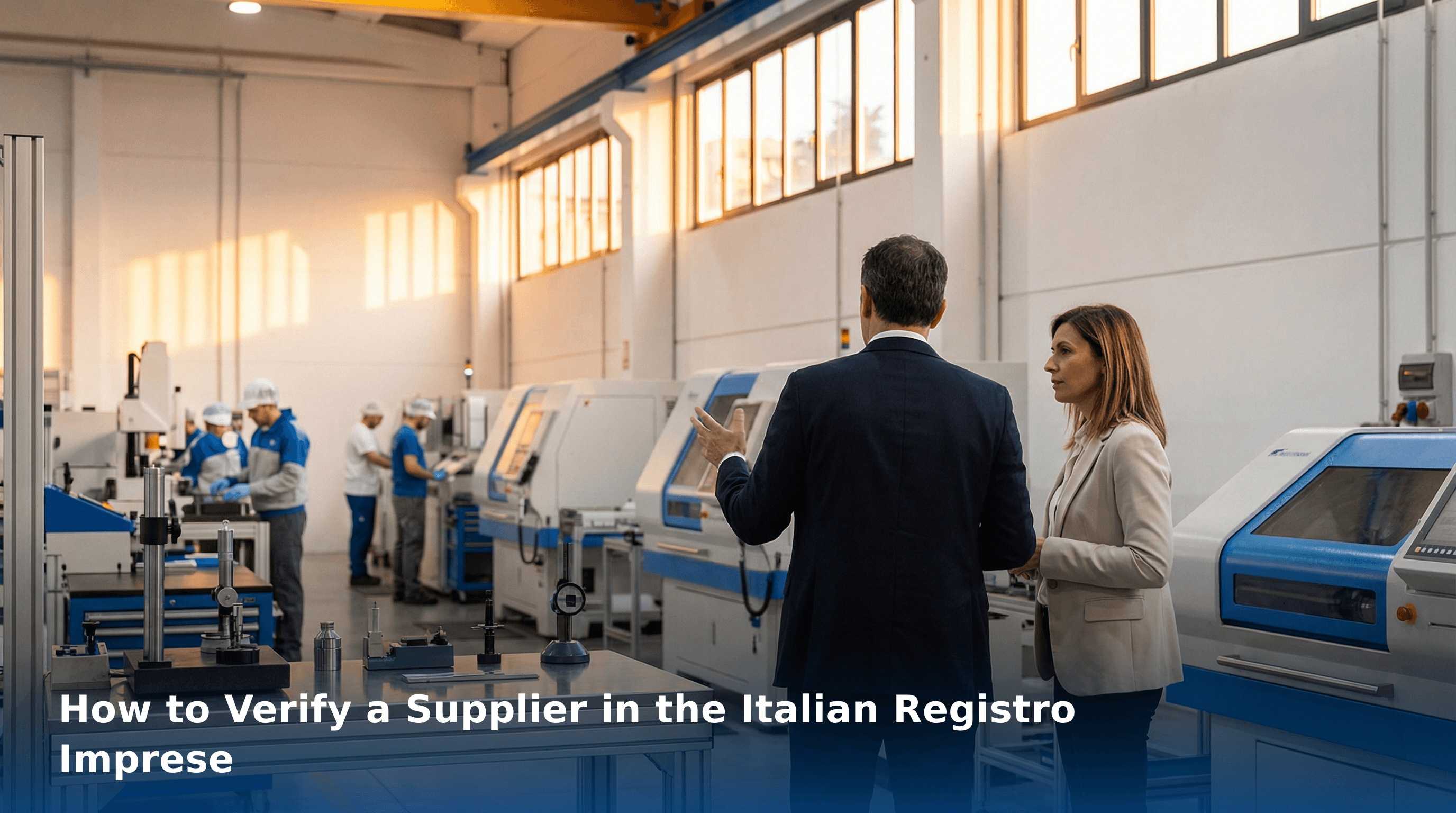
- Visiting plants to compare real processes and records with what is stated in specifications and certificates
- Verifying that batch records, cleaning protocols, ingredient storage, and mixing practices make fraud or tampering harder to hide
Document and Label Reconciliation
- Checking that labels, origin claims, and lot coding on the production line match contracts and regulatory requirements in the destination market
- Spotting inconsistencies between internal production documentation and what is presented to overseas buyers
Targeted Testing and Third-Party Checks
- Coordinating targeted lab analyses based on known EU fraud patterns (e.g., residues, undeclared ingredients) before goods leave Europe
- Building a risk-based testing plan instead of treating all suppliers and products the same
What a Factory-Floor Verification Engagement Looks Like
For procurement teams, the goal is to turn "fraud and tampering" from an abstract risk into a concrete control step in the sourcing process.
1. Risk Scoping
Review product category, target market, and specification to map the most likely fraud/tampering scenarios using current EU fraud intelligence—origin claims, residues, documentation integrity.
2. On-Site Visit and Line Observation
Walk-through of receiving, storage, production, and packaging; spot-checks of documentation, batch records, and label roll stock against agreed specifications.
3. Sampling and Lab Coordination
Collection of samples for independent analysis focused on risk-relevant parameters rather than generic testing.
4. Fraud-Risk Report
Clear rating (low/medium/high) with supporting evidence and specific remediation or monitoring recommendations for procurement and compliance teams.
Why This Matters for Your Team's Reputation
The European Commission emphasises that these monthly fraud-suspicion reports are used to help authorities and operators organise risk-based controls and protect consumers.
When a buyer mirrors that mindset—using local intelligence, factory-floor checks, and targeted analyses—it signals seriousness to regulators, customers, and internal stakeholders.
Using a partner like Ambaex to screen for product and record tampering, false origin, and unauthorised residues is not just about avoiding one bad shipment. It is about protecting your organisation's name in markets where recalls, media coverage, and regulatory scrutiny can quickly turn a supplier's deception into your reputational crisis.
Next Step for Procurement and Compliance Teams
If your team is sourcing from Spain, Portugal, or Italy—or planning to pivot more volume into Europe—it is now possible to align your fraud-control framework with current EU intelligence and on-the-ground verification.
Consider commissioning a pilot factory-floor verification for one high-risk product line, using Ambaex as your local fraud-screening layer, and use the findings to calibrate your wider European supplier portfolio.
Supplier Verification Services →
info@ambaex.com · ambaex.com/contact
Independent Intelligence · Factory-Floor Verification · Southern Europe