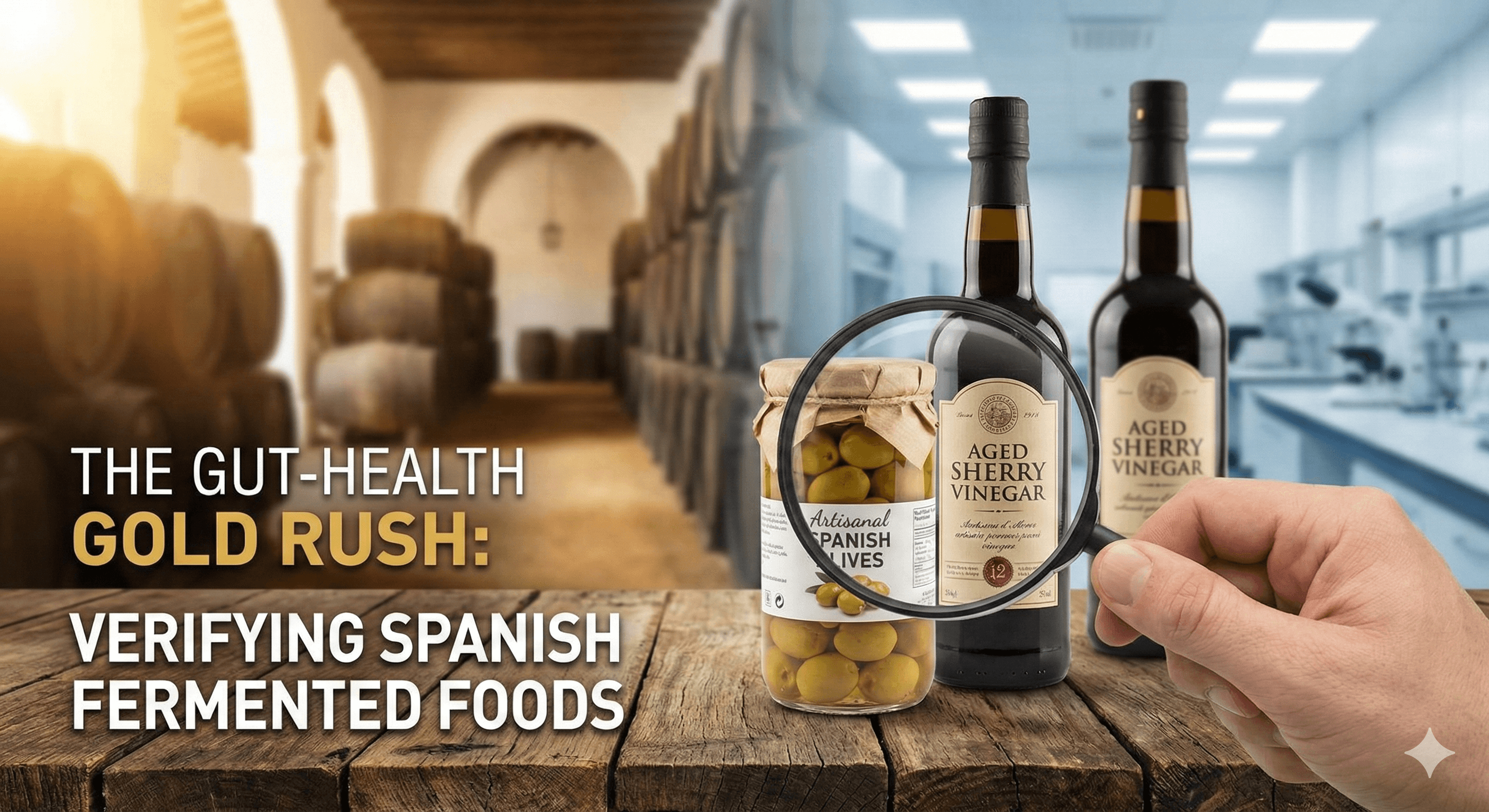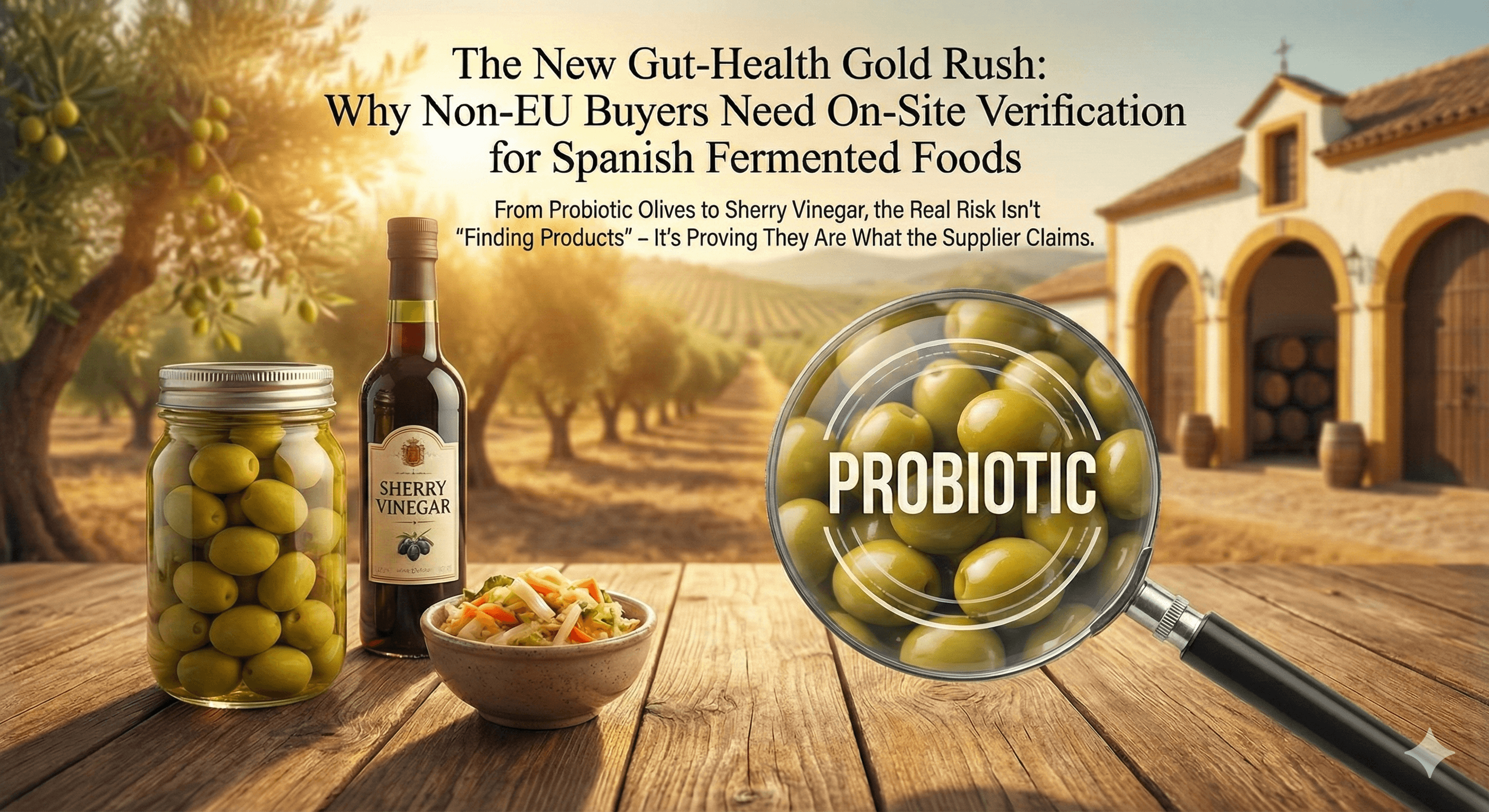
This article provides a due-diligence checklist for non-EU buyers of Spanish probiotic olives and encurtidos to mitigate regulatory, recall, and reputational risks associated with misrepresented live cultures.
- Many Spanish 'probiotic' olives lack live cultures, creating risk for non-EU importers.
- Verify 'probiotic' claims with process controls and strain data before importing.
- EU research identifies LAB strains from olive brines as potential probiotics.
- Heat-treated or shortcut-acidified olives may not contain viable live cultures.
- Non-EU buyers bear regulatory and recall risk if labels are unsubstantiated.
AMBAEX Market Intelligence
Probiotic Olives and Encurtidos: Due‑Diligence Questions Every Non‑EU Buyer Should Ask in Spain (Before the First Container)
Turning Microbiology into a Practical Procurement and QA Checklist for US, GCC and Asian Buyers
Executive Summary
Spanish‑style table olives and encurtidos (pickled vegetables) are more than salty snacks: they are natural vegetable fermentations dominated by lactic acid bacteria (LAB), with EU‑funded projects selecting specific strains from olive brines as potential probiotic candidates.
That scientific base has created a new marketing wave—“probiotic olives”, “live‑culture encurtidos”, “natural fermented vegetables”—but many products promoted under these claims are standard, heat‑treated or shortcut‑acidified, with little or no data on live cultures at end of shelf‑life.
For non‑EU category managers and quality teams in the US, GCC and Asia, this is not a lab curiosity; it is a procurement risk. If your labels, spec sheets or marketing decks lean on “probiotic” or “live culture” and you cannot evidence process controls or strain data, you are the one carrying regulatory, recall and reputational exposure—not the Spanish supplier.
This guide turns the science into a practical due‑diligence checklist you can use in Spain before signing the first container‑level contract.
Why Spanish Olives and Encurtidos Are a Natural Probiotic Platform
Spanish‑style olive fermentation is a spontaneous or starter‑guided process where brined olives undergo lactic fermentation: LAB consume sugars and produce lactic acid, lowering pH and stabilising the product while generating flavour compounds.
EU research programmes on table‑olive fermentation have isolated LAB strains (for example, certain Lactobacillus species) from Spanish olive brines and assessed their probiotic potential—tolerance to gastric conditions, adhesion to intestinal cells and possible health‑related effects—demonstrating that table olives can serve as carriers for viable probiotics when fermentation is properly controlled.
Similar microbiological profiles exist in traditionally fermented encurtidos (mixed vegetables, pickled peppers, cucumbers), where LAB again dominate when salt, temperature and time are correctly managed, making these products plausible vehicles for “live culture” claims—provided the process and cold chain support survival through shelf‑life.
The Business Risk Behind “Probiotic” and “Live Culture” Labels
As demand for gut‑health and microbiome‑friendly products grows, the incentive to stretch or over‑simplify “probiotic” claims increases.
Typical risk patterns include:
- Standard olives sold as “probiotic”: conventional fermented olives, later pasteurised or heat‑treated for shelf stability, still marketed as containing “live cultures”, even though heat has destroyed most LAB.
- Acidified rather than fermented products: olives or vegetables processed primarily with added acid (e.g., acetic or lactic acid) and limited fermentation time, but positioned as “naturally fermented” or “traditional probiotic” foods.
- No survival data: suppliers using generic literature about olives or LAB to justify “probiotic” language, without batch‑specific data showing viable counts of the claimed strains at end of shelf‑life under realistic distribution conditions.
- Vague strain information: labels or spec sheets mention “lactic cultures” or “probiotic bacteria” without identifying the strains, their origin, or whether they have been evaluated for safety and function.
If you build brand, packaging and marketing around “probiotic olives” or “live‑culture vegetables” produced under these conditions, you own the risk when regulators or media ask for evidence.
Due‑Diligence Questions Procurement and QA Must Ask in Spain
The easiest way to expose weak claims is to ask structured, technical questions that any serious “probiotic” supplier should handle comfortably. Treat these as non‑negotiable in your on‑site visits and remote vetting.
1. Fermentation Process and Controls
- How is the fermentation started? Ask whether the process is spontaneous (relying on natural microbiota) or uses defined starter cultures. If starters are used, request their strain designations and origin.
- What are the key fermentation parameters? Request typical fermentation time, temperature ranges, target pH and salt levels, and how these are monitored and recorded.
- Is there any heat treatment? Clarify if products are pasteurised or subjected to any thermal step after fermentation. If yes, “probiotic” or “live culture” claims are unlikely to be defensible.
- How are deviations handled? Ask for written procedures describing what happens when pH, salt or temperature fall outside set limits, and where these actions are recorded.
2. Strain Identity and Probiotic Evidence
- Which strains are you claiming as probiotic? Suppliers should be able to name the strains (e.g., Lactobacillus plantarum + strain code), not just the species.
- What evidence supports their selection? Ask for summaries of in‑house or published data on survival through gastric conditions, adhesion or other relevant functional markers, ideally linked to the strain codes they use.
- Who owns or controls the starter culture? Clarify whether the strains are proprietary, purchased from a culture supplier, or isolated in collaboration with a research institution—and what quality controls are in place for each batch.
3. Viable Counts and Shelf‑Life
- What minimum viable count do you guarantee at end of shelf‑life? If they cannot state a CFU/g or CFU/serving target and back it with test data, “probiotic” claims are speculative.
- How often do you test for LAB counts and where? Ask for their sampling plan (start, mid and end of shelf‑life), which lab performs the analysis, and which methods are used.
- How have distribution conditions been validated? Check whether they have simulated realistic temperature profiles for export lanes (e.g., Spain–GCC summer, Spain–US via transhipment) and measured survival under those conditions.
4. Labelling, Claims and Regulatory Alignment
- How do you define “probiotic” or “live culture” on the label? Request draft labels and marketing copy. Compare their language with guidance in your destination markets (FDA, EFSA opinions used by local regulators, GCC national rules).
- Can you supply a dossier to support claims? Ask for a basic claim‑support file consolidating process description, strain identity, analytical data and any scientific references. If they have nothing beyond PowerPoint slides, that is a red flag.
- Have your products been challenged by any authority? Directly ask whether any batches have been detained, recalled or questioned in the EU, UK or export markets due to labelling or safety concerns.
5. Traceability and Documentation
- Can we trace from lot to brine and tank? You should be able to link finished‑product lots back to fermentation tanks, dates, raw materials and culture batches.
- What records can we access during audits? Clarify whether you can review fermentation logs, corrective actions and laboratory reports during second‑party audits.
- What certifications do you hold? BRCGS, IFS, FSSC 22000 or equivalent schemes do not guarantee probiotic performance, but they do indicate baseline food‑safety and documentation discipline.
Operational Impact: Why This Is a Procurement Issue, Not Just a Lab Issue
From a distance, it is easy to treat “probiotic” as a creative label element or a discussion between your supplier’s technical team and your QA manager. In reality, it has direct financial and contractual implications that sit squarely in procurement’s remit.
If you build pricing, positioning and forecasts around “probiotic olives” or “live‑culture encurtidos” and the claim later proves indefensible, you may face:
- Forced re‑labelling: removing “probiotic” references mid‑cycle, with associated artwork, printing and logistics costs.
- Regulatory action: warning letters, product seizures or mandatory withdrawals if authorities consider claims misleading or unsubstantiated.
- Brand damage and lost shelf space: retailers and platforms may downgrade or delist SKUs that attract controversy, especially in crowded gut‑health categories.
- Disputes with suppliers: if contracts are not explicit on claim responsibilities, you may struggle to recover losses from Spanish partners who argue they simply “met your brief”.
That is why these questions belong in your sourcing checklist and supplier‑qualification process, not only in a lab report after the fact.
When Answers Are Weak: Why You Need a Second‑Party Auditor on the Ground
On paper, any supplier can present a polished story: attractive labels, generic references to “Mediterranean probiotics”, and a couple of lab certificates from pilot runs.
On the factory floor, reality can look very different: inconsistent brine management, limited temperature control, incomplete records, or thermal treatments that quietly nullify any probiotic benefit.
When responses to the due‑diligence questions above are vague, incomplete or overly defensive, that is the moment to treat the issue as a procurement risk, not a scientific debate:
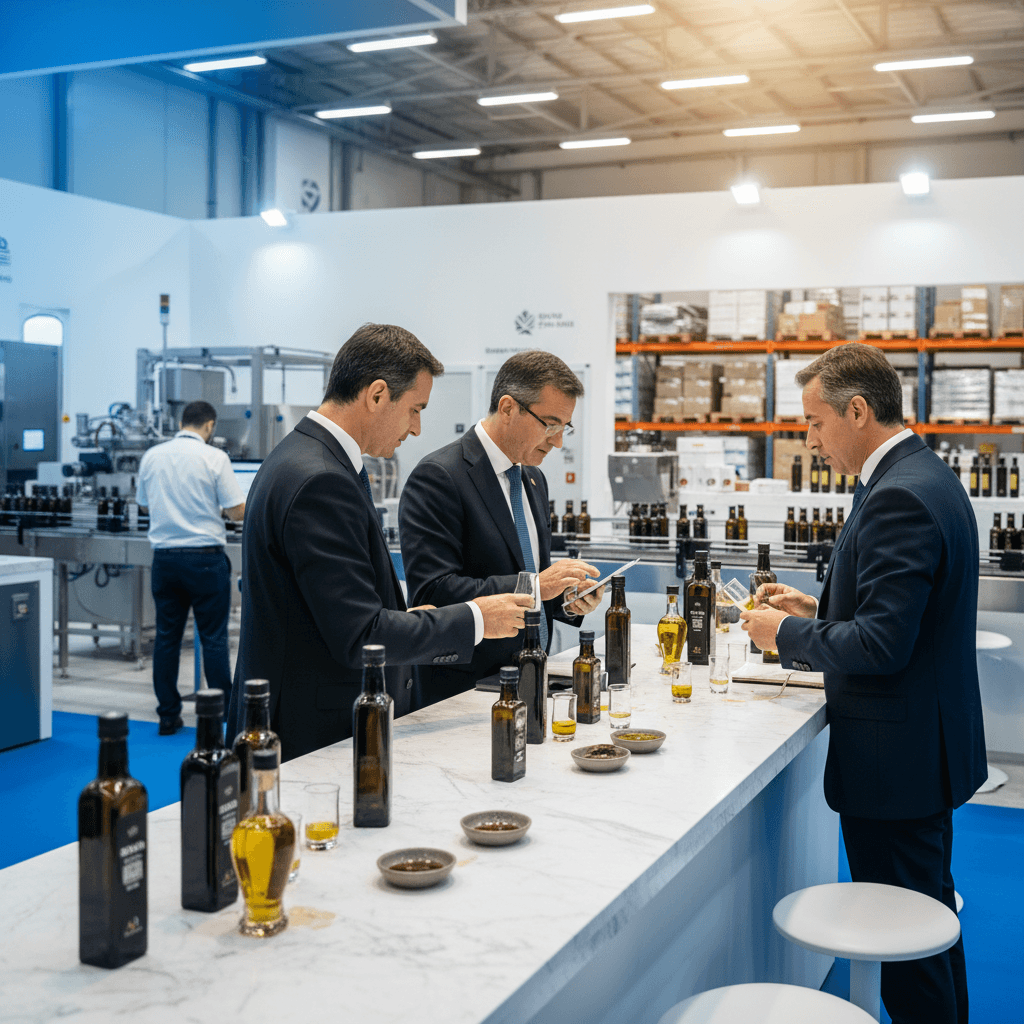
- Send a buyer‑side, second‑party auditor to Spain to verify processes, documentation and lab practices directly.
- Use the audit to reconcile marketing claims with what actually happens in fermentation, packaging and storage.
- Build conditional go/no‑go decisions and volume commitments around audit outcomes, not just pricing and samples.
This is not a lab topic; it is a sourcing and contract‑risk topic. If your supplier cannot answer basic fermentation, strain and documentation questions, you need independent eyes on the ground before the first container is booked.
Get the Probiotic Olive & Encurtido Due‑Diligence Checklist
Probiotic positioning can add real value to your Spanish olives and encurtidos, but only if the science, process and paperwork behind the claim survive contact with regulators, retailers and informed consumers.
Before you sign on “probiotic olives Spain bulk” or commit to a new “live‑culture vegetables” line, make sure your due‑diligence questions go deeper than price, packaging and MOQ.
info@ambaex.com | ambaex.com/contact
Zero Kickbacks. Physical Verification in Spain, Portugal and Italy. Your Procurement Intelligence Partner for Fermented Foods.