This article analyzes the benefits and risks of Portuguese bulk wine sourcing for Canadian agencies, emphasizing the need for second-party supplier audits to ensure compliance and quality.
- Portugal is a growing wine exporter to Canada (C$51-55M/year).
- Bulk wine sourcing offers competitive pricing and distinctive styles.
- Remote sourcing from Portugal poses compliance and verification risks.
- Second-party audits ensure supplier compliance with Canadian regulations.
- Ambaex offers supplier audits and procurement-as-a-service.
AMBAEX Market Intelligence
Portuguese Wine for Canadian Agencies: Bulk Sourcing With Second-Party Supplier Audits
Competitive Pricing and Distinctive Styles—If You Can Verify the Supplier From 5,000 Kilometres Away
Executive Summary
Portuguese wine is already a meaningful, growing part of Canada's import mix. Portugal exported about €966 million of wine worldwide in 2024 (347 million litres at an average €2.79/litre), and wine is now one of Portugal's top three exports to Canada at roughly C$51–55 million per year.
For Canadian agencies, this combination of competitive bulk pricing, distinctive styles like Vinho Verde, and stable export growth makes Portugal a logical complement to Spain and Italy in any European sourcing brief.
The problem: Remote sourcing risk doesn't disappear at lower price points. Long digital supplier lists, opaque co-ops and exporters, and compliance pressure remain—especially when you're vetting bulk suppliers for LCBO/SAQ work from a desk in Toronto.
The solution: A second-party supplier audit in Portugal, integrated with procurement-as-a-service Europe, verifies that your bulk partner meets Canadian regulatory requirements before the flexitank ships. Here's where Ambaex's factory audit service and outsourced procurement Spain Portugal Italy model plugs into your Portuguese wine sourcing.
The Remote Sourcing Risk: Bulk Doesn't Mean Simple
Canada's overall wine imports rose 5.3% in volume to 187.2 million litres in early 2025, while spend fell 5.2%. Buyers are actively trading down in price but not in volume—exactly the environment where Portuguese value wines make sense.
But sourcing bulk wine from Portugal creates specific remote procurement challenges:
- Cooperative complexity: Many Portuguese bulk suppliers are cooperatives or regional associations—structures that can obscure who actually controls quality and traceability
- Documentation gaps: Can the supplier provide recent (≤3 months) analysis for the specific bulk lot being shipped, not generic winery averages?
- Traceability uncertainty: For LCBO/SAQ and CFIA, suppliers must show clear traceability from vineyard to tank to flexitank—essential to avoid mislabelling and origin fraud
- Monopoly experience: Has this Portuguese exporter ever shipped to a highly regulated buyer, or are you their compliance education project?
- Stability and transit risk: Can the wine withstand long-distance shipping to Canada with stability tests compatible with your bottling timeline?
Third-party certifications confirm that a system meets a standard. They don't confirm that a specific Portuguese bulk supplier can meet your lot specifications, analytical requirements, and LCBO/SAQ documentation standards.
This is where a second-party supplier audit closes the gap—and where Ambaex's outsourced procurement Spain Portugal Italy model delivers verified suppliers instead of just names.
When Portugal Makes Sense vs. Spain or Italy
Portugal is a smaller exporter than Spain or Italy, but it is growing faster in volume and remains sharply priced—ideal for bulk and private-label programs.
Export Scale and Price Bands
In 2024, Portugal exported around 347 million litres of wine worth €966 million, with an average export price of €2.79/litre, after volume grew 8.7% and value 4.5% year-on-year. By comparison, Canada's total wine imports in the first half of 2025 averaged €4.46/litre, with bottled at €6.33/litre and bulk significantly cheaper—so Portuguese wine sits comfortably below Canada's average landed cost.
Where Portugal Is Stronger Than Spain/Italy for Bulk
Vinho Verde and fresh blends: High-acid, low-alcohol whites and light blends for summer programs and "refreshing" private labels. Portugal's Atlantic profile is a clear differentiator—Vinho Verde and similar styles are hard to replicate in Spain or Italy at the same price/character.
Red blends for entry/mid tiers: Douro, Alentejo, and Tejo bulk reds can hit LCBO/SAQ value shelves with a distinct Portuguese identity at ex-cellar prices often below comparable Italian DOC or Spanish DO wines, thanks to Portugal's lower average export price per litre.
Portfolio Logic
In practice, Portugal is ideal when a Canadian agency wants a second or third European origin in its portfolio: Spain for volume, Italy for classic names, and Portugal for distinctive value and niche "discovery" segments.
But adding Portugal means adding another country to verify—another set of suppliers to audit, another compliance pipeline to manage. Unless you have a single sourcing partner covering all three.
How to Vet a Portuguese Bulk Supplier for LCBO/SAQ Work
For LCBO/SAQ use, "reliable bulk supplier" means more than price. The winery or cooperative must withstand Canadian lab and label scrutiny.
1. Compliance and Lab Capability
LCBO quality assurance protocols require analytical testing for alcohol, free/total sulphites, volatile acidity, residual sugar, metals, and sometimes ethyl carbamate and pesticide residues under ISO 17025–equivalent methods.
A Portuguese bulk supplier must:
- Provide recent (≤3 months) analysis for the specific bulk lot being shipped, not generic winery averages
- Demonstrate routine QC (fermentation tracking, SO₂ dosing, cold stabilisation) and stability tests compatible with long-distance shipping to Canada
2. Traceability and Documentation
For LCBO/SAQ and CFIA, suppliers must show clear traceability from vineyard to tank to flexitank or IBC.
Documentation to scrutinise:
- Harvest and intake records (region, variety, parcel)
- Internal batch codes and blending logs
- Export documents that match origin and analytical specs—essential to avoid the kind of mislabelling and origin fraud seen in some Spanish and French bulk scandals
3. Operational Experience With Monopolies
Many Portuguese wineries export heavily to Brazil, Angola, and EU markets; a smaller subset has direct experience with highly regulated buyers like Scandinavia's monopolies or North American state boards.
For Canada, the safest partners are those who:
- Already ship to controlled markets (e.g., Systembolaget, ALKO, Vinmonopolet) or to North American state monopolies
- Can produce bilingual or custom labels and manage tight shipping windows—a pre-condition for LCBO's and SAQ's calendar
These criteria can be asked about remotely. They can't be verified remotely. Which is where a second-party supplier audit becomes essential.
How a Second-Party Supplier Audit in Portugal Closes the Gap
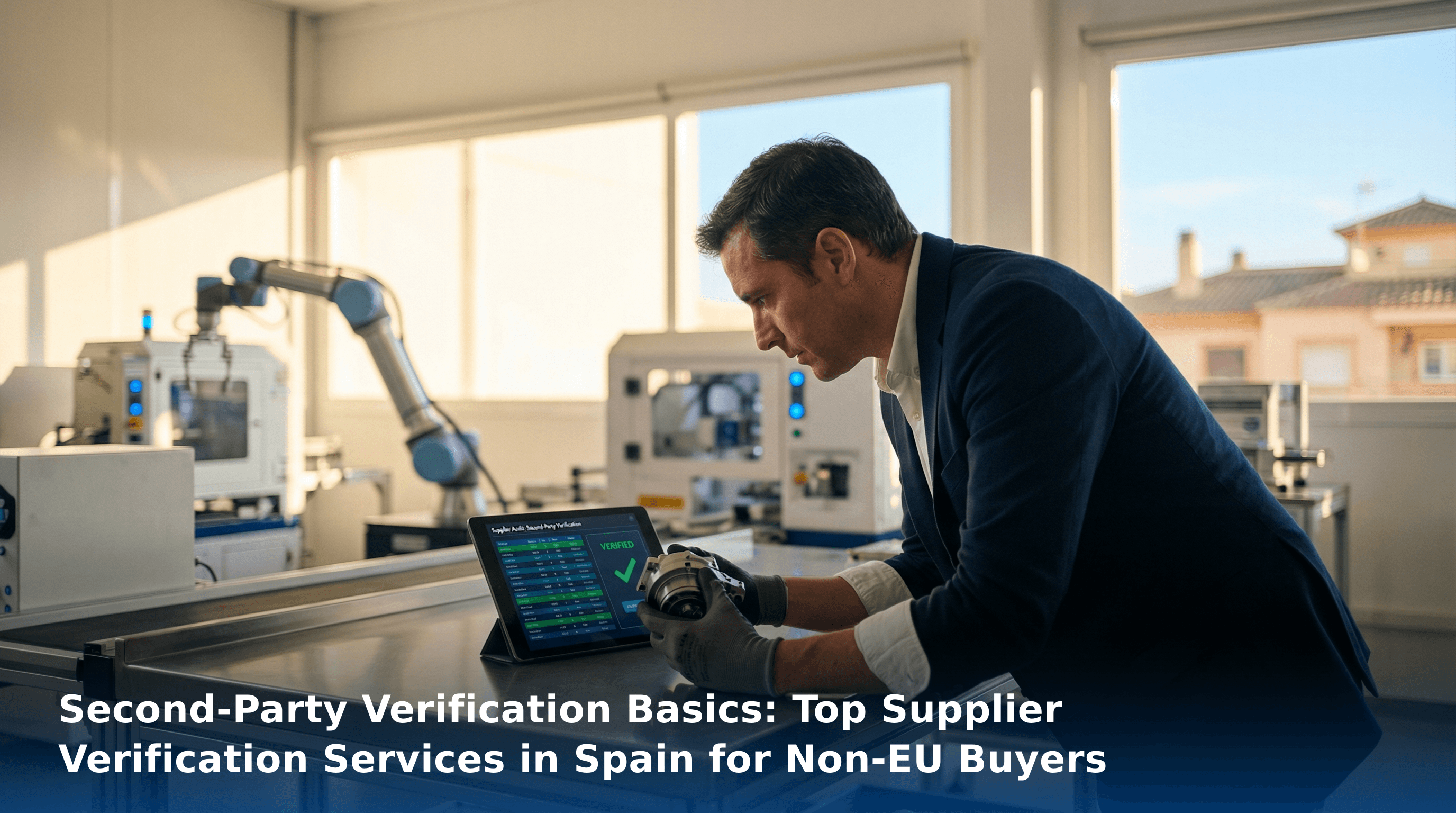
A second-party audit, per ISO 19011 principles, is an external audit conducted by or on behalf of the buyer. It's not a generic certification—it's verification tied to your specific procurement requirements.
What Ambaex's Verification Role Covers
As a procurement intelligence auditor in Europe, Ambaex conducts on-site audits at Portuguese wineries and co-ops covering:
- Tank capacity and hygiene: Physical verification of bulk storage, fermentation capacity, and sanitation practices
- Traceability systems: Review of vineyard-to-tank documentation, batch tracking, and blending logs
- Lab capability: Assessment of QC procedures, SO₂ management, stability protocols, and alignment with LCBO/SAQ analytical parameters
- Documentation review: Harvest records, export certifications, and origin compliance
- Commercial fit: Capacity vs. your volume requirements, label adaptation capability, shipping experience to regulated markets
Pre-Shipment Coordination
Beyond the initial audit, Ambaex coordinates pre-shipment lab tests mirroring LCBO/SAQ parameters and reviews labels against Canadian bilingual and origin requirements—before anything ships.
The Outcome: Verified Suppliers, Not Just Promises
The audit produces a written report ranking suppliers by reliability, compliance readiness, and capacity—so Canadian agencies do not rely on promises or generic brochures. The recommendation is clear: approve, approve with conditions, or reject and re-source.
Add Portugal to Your European Sourcing Brief
If you're a Canadian agency building bulk programs for LCBO or SAQ, Portugal offers competitive pricing and distinctive styles—but only if you can verify the supplier.
On your sourcing request, include:
- Target province/monopoly (LCBO, SAQ, other)
- Desired styles (Vinho Verde-type white, Douro/Alentejo red, blends)
- Annual bulk volume (litres) and preferred formats (flexitank, IBC)
- Compliance requirements (LCBO, SAQ, FSVP, or other)
Once the brief is submitted, Ambaex uses on-the-ground audits and lab coordination in Portugal and Spain to propose vetted, LCBO/SAQ-ready suppliers—verified through second-party audits, not just names on an email list.
Contact: info@ambaex.com