AMBAEX Market Intelligence
The Trader Trap & Identity Checks: How to Verify a Supplier in the Italian Registro Imprese
Need to verify an Italian supplier before wiring funds? Here’s how live Visura Camerale extracts help non‑EU buyers avoid the “trader trap”.
Introduction
For non‑EU buyers, Italy is a powerful sourcing hub in food, ingredients, machinery, packaging and fashion, but it is also a market where distance, language and intermediaries can hide who you are really dealing with.
The biggest risk is the **trader trap**: paying an “Italian supplier” that is either a thin trader with no real assets or a front company misrepresenting its status, capacity or legal situation.
In this context, using the official Italian Business Register (Registro Imprese) and pulling a live Visura Camerale (company registration report) is the fastest way to check identity, legal status and activity codes before you commit funds.
Why the Trader Trap Is So Dangerous for Non‑EU Buyers
The trader trap happens when you think you are dealing with a solid Italian manufacturer, but in reality you are sending money to a lightly capitalised intermediary, a one‑person “company” or an entity in legal trouble.
On paper, the website, logo and pitch may look convincing, yet beneath the surface the business might have no plant, no staff and no real ability to deliver your order without relying on unknown third parties.
Typical red flags
- Company refuses factory visits or keeps changing the “production site” story.
- Quotes arrive from an entity different to the name shown on product labels or samples.
- Large deposits requested to a company with no visible track record or references.
- Contracts list a trading company, but technical talks always involve a “partner factory” you never see.
The good news is that many of these risks can be reduced in hours by checking the supplier directly in the official Registro Imprese and reading the Visura Camerale carefully.
What Is the Registro Imprese and the Visura Camerale?
The Registro Imprese is Italy’s official, nationwide business register managed by the Chambers of Commerce. It contains legal and economic information on millions of Italian companies and individual businesses.
The Visura Camerale (also called company registration report or company profile) is an official extract from that register, available in Italian and often in English, that summarises the key data of a specific company.
What a Visura Camerale typically includes
- Company name, legal form and registration number.
- Registered office address and, where applicable, local units.
- Tax code / VAT number and registration dates.
- Corporate purpose and economic activity codes (ATECO/NACE).
- Share capital, ownership structure and key officers.
- Information on filings, financial statements and sometimes quality or sector certifications.
For a foreign buyer, this single document is often the most reliable starting point to confirm whether a supposed “Italian supplier” is a real, active business with a profile that matches the story you have been told.
Step‑by‑Step: How to Check a Supplier in the Italian Registro Imprese
If you are a non‑EU buyer, you do not need to become an Italian legal expert, but you should know the basic steps for running a first‑line identity check.
1. Collect the right identifiers from the supplier
Before you look at any register, ask the supplier for:
- Full legal name (ragione sociale), not just brand or trading name.
- Registered office address.
- VAT number (Partita IVA) and/or tax code.
- Chamber of Commerce registration number if they have it to hand.
Reluctance to share this information quickly is a warning sign by itself.
2. Retrieve the Visura Camerale
You or your local verification partner can then retrieve a live Visura Camerale from the official Italian Business Register portals or through authorised intermediaries.
Whenever possible, request the most recent version and, if needed, an English‑language report so that your internal teams in procurement, finance and compliance can read it without delay.
3. Check basic identity and status
Once you have the report, first confirm that:
- The legal name, VAT number and address match what the supplier provided.
- The company is marked as active, not liquidated, struck‑off or under insolvency proceedings.
- The legal form (for example, SRL, SPA) fits the size and claims of the supplier.
If there are discrepancies between the Visura and the information in offers, invoices or websites, pause and clarify before you move forward.
Reading Between the Lines: How to Use the Visura as a Buyer
A Visura Camerale is not just a registry snapshot; it is a tool you can use to spot inconsistencies and ask better questions.
1. Activity codes vs. what they are selling you
Check the economic activity description and ATECO codes. If the supplier claims to be a manufacturer of food products or machinery, but the register shows only “wholesale trade” or unrelated sectors, you are likely dealing with a trader.
2. Age and evolution of the company
Look at the incorporation date and corporate history. A company that was created a few months ago but is offering you large, complex projects deserves extra scrutiny, especially if deposits are high and references are thin.
3. Share capital and ownership
While share capital is not a perfect indicator of strength, very low capital combined with high volumes and aggressive terms should prompt you to tighten payment conditions and request further checks.
4. Offices, local units and size signals
Multiple local units, long filing histories and regular financial statements may indicate a more established structure. A single small office, no local units and minimal filings can be consistent with a micro‑trader rather than a manufacturer.
Combining Registry Checks with Second‑Party Verification
Registry checks and Visura Camerale extracts answer the question “Does this company legally exist and what does it officially do?”, but they do not show you the factory floor, hygiene, quality systems or on‑time delivery track record.
To avoid both the trader trap and operational surprises, non‑EU buyers get the best results when they combine identity checks from the Registro Imprese with on‑the‑ground second‑party audits.
What a combined check can look like
- Identity confirmed by Visura Camerale, including correct activity codes and active status.
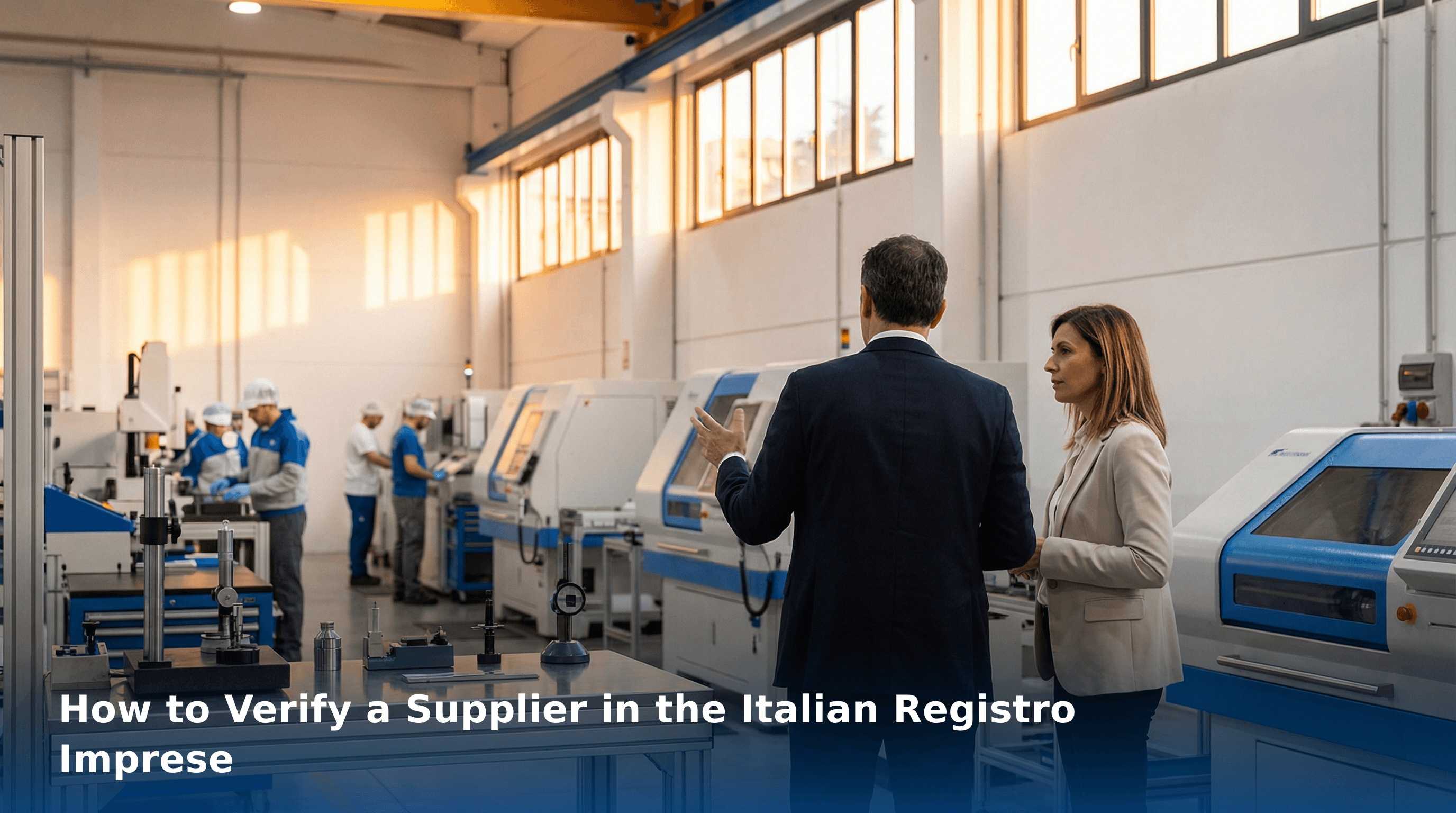
- On‑site visit at the declared production site to confirm real manufacturing activity.
- Verification that labels, samples and documentation match the entity in the register.
- Basic review of processes, certifications and export capabilities relevant to your market.
This layered approach turns the Visura from a static document into a dynamic risk‑management tool embedded in your sourcing process.
How a “File Check” Offer Fits into Your Process
For many deals, your first question is simple: “Is it safe to even continue the conversation with this Italian supplier?”
A focused “file check” service that pulls and interprets a live Visura Camerale for you is an efficient way to screen suppliers early, especially when you are handling multiple leads or RFQs in parallel.
When to request a file check
- Before you add a new Italian supplier to your vendor master data.
- Before issuing high‑value POs or framework agreements.
- Before wiring deposits or agreeing to supplier‑friendly payment terms.
- Whenever information from websites, emails and contracts does not fully align.
From there, you can decide if the supplier is worth a deeper second‑party audit, a smaller trial order with tight conditions, or no further engagement.
Notes
Meta description
Need to verify an Italian supplier before wiring funds? Learn how to use the Italian Registro Imprese and live Visura Camerale extracts to avoid the trader trap and run fast identity checks as a non‑EU buyer.
Tags
- Italian supplier verification
- Registro Imprese check
- Visura Camerale for buyers
- verify Italian company before payment
- Italian business register identity check
- non EU buyers Italy sourcing
- second party audits Italy
- Italian company due diligence
- trader trap Italian suppliers
- file check Italian supplier
Longtail tags
- how to check an Italian supplier in the Registro Imprese
- using Visura Camerale to verify Italian companies
- identity check Italian company before wiring funds
- second party verification plus Registro Imprese checks
- step by step Italian supplier file check for non EU buyers
Strategies to Consider
- Use exact buyer questions (“How to check an Italian supplier?”, “What is a Visura Camerale?”) as headings to capture long‑tail search traffic and featured snippets.
- Include one clear, memorable concept—in this case, “the trader trap”—and reuse it across posts to build a recognisable content theme.
- Add a simple visual or downloadable checklist (“5 things to read in a Visura”) linked from this article to increase shareability and time on page.
- Internally link this piece to articles on second‑party audits in Italy and payment‑term strategy to create a small “Italian supplier verification” content cluster.
- Refresh the article periodically with screenshots, small anonymised case stories and updated registry links to keep it current and to nudge search engines to recrawl.