The India-EU FTA eliminates/reduces duties on EU goods, offering Indian firms tariff cuts on machinery, chemicals, and olive oil, but success requires navigating EU bureaucracy with local intelligence.
- India-EU FTA eliminates/reduces duties on 96.6% of EU goods.
- EU will liberalize 99.5% of its tariff lines on imports from India.
- Steep tariff cuts on European machinery (previously up to 44%).
- Tariff cuts could save European exporters up to €4 billion yearly.
- Success requires sourcing, verifying, and executing deals with local intelligence.
AMBAEX Market Intelligence
How Indian Firms Can Use the India–EU FTA to Win High‑Stake Deals with European Suppliers
From Zero‑Tariff Olive Oil and Machinery to Verified Partners in Spain, Portugal and Italy
Executive Summary
The new India–EU Free Trade Agreement commits India to eliminate or reduce duties on about 96.6% of EU goods exports, while the EU will liberalise 99.5% of its tariff lines on imports from India over seven years, creating one of the most comprehensive trade corridors in the world.
For Indian firms, this means steep tariff cuts on European machinery (previously up to 44%), chemicals (22%), wines and spirits (150% down to roughly 20–40% over time), and olive oil (45% to zero), dramatically improving the economics of importing high‑value inputs and consumer products from Southern Europe.
Yet lower duties do not change the reality that Europe is a bureaucratic maze, with dense regulations, language and cultural gaps and real risks of origin misuse, documentation errors and fraud in cross‑border deals.
The firms that will win under the FTA are those that treat it as a three‑step system—sourcing, verifying and executing—backed by on‑the‑ground intelligence in Spain, Portugal and Italy, not just cheaper HS codes on a spreadsheet.
What the India–EU FTA Really Changes
In 2024, EU exports to India were worth roughly €48–49 billion in goods and €26 billion in services; machinery and electrical equipment alone accounted for about €16.3 billion of those exports, making them the largest EU export category to India.
The FTA directly targets these capital‑intensive flows: EU estimates indicate that tariff cuts could save European exporters up to €4 billion per year in customs duties, much of which can be reflected in sharper pricing or better terms for Indian buyers.
| Product Category | Pre‑FTA Indian Duty (Illustrative) | Post‑FTA Trajectory |
|---|---|---|
| Machinery & mechanical appliances | Up to ~44% on many EU machines | Duty‑free from entry into force for most lines, remaining phased out in up to 10 years |
| Chemicals | Up to ~22% | Broad move to 0% duties, cutting industrial input costs |
| Olive oil | Up to 45% | Tariffs eliminated within about five years, effectively 0% for qualifying EU origin |
| Processed food (pasta, chocolate, biscuits, pet food) | Around 33–50% | Tariffs eliminated at entry into force or after short staging periods |
| Wine | Around 150% | Halved initially, then reduced to about 20–30% over 5–10 years |
| Spirits & beer | Up to 150% for spirits; 110% for beer | Spirits to about 40%; beer to around 50% |
These shifts transform the business case for importing from Spain, Portugal and Italy: where European products previously sat in a “nice‑to‑have” premium niche, many now move into the “strategic sourcing” and “mass premium” bands for Indian retailers, hospitality groups and manufacturers.
Where the Opportunity Meets Risk: Europe’s Bureaucratic Maze
Even with tariffs falling, Indian firms face the same old obstacles when dealing with the EU: complex regulations, multi‑layered documentation, and fragmented communication across languages and business cultures.
Cross‑border compliance experts note that language and cultural barriers routinely cause misinterpretation of legal documents and regulatory requirements, while differences in business practices can lead to unintentional non‑compliance or broken trust.
Typical Pain Points for Indian Companies Working with European Suppliers
- Language and documentation gaps: key production records, certificates and corrective‑action reports are often in Spanish, Portuguese or Italian; poor translation can hide crucial issues or create inconsistencies across invoices, packing lists and proofs of origin.
- Regulatory overlap: EU suppliers must meet EU food‑safety or product rules, but Indian importers are also accountable under regimes such as FSSAI, BIS and CAROTAR, which have their own documentation and origin‑proof requirements.
- Origin and FTA misuse risks: India has already tightened its Customs (Administration of Rules of Origin under Trade Agreements) framework, shifting from “certificate of origin” to broader “proof of origin” requirements and increasing post‑clearance audits to combat routing abuses and fraudulent claims.
- Broker vs. manufacturer confusion: in Southern Europe it is common for trading companies to present themselves as “factories”, blurring accountability when quality, capacity or documentation problems emerge.
- Cultural and negotiation style differences: expectations around timelines, escalation, documentation detail and after‑sales support can differ markedly between Indian corporates and mid‑sized European producers.
On paper, the FTA simplifies trade; in practice, it raises the stakes: customs and tax authorities are under pressure to police misuse of preferential tariffs, while firms on both sides race to exploit new openings—conditions that create both opportunity and fertile ground for mistakes and fraud.
A 3‑Step Playbook: Source, Verify, Execute
To turn the FTA into a durable advantage, Indian companies need a structured lane from opportunity discovery to contract execution, with verification built in at each stage.
Think of it as a three‑step operating system: Source the right categories and suppliers, VerifyExecute
1. Source: Use the FTA to Re‑draw Your Supplier Map
- Prioritise tariff‑sensitive categories: target olive oil, wine, processed foods, high‑value machinery, chemicals and textiles where duty cuts are largest and Southern Europe (Spain, Portugal, Italy) has competitive strength.
- Combine trade‑fair and desk research: use events like Gulfood, Anuga, SIAL, Alimentaria and Prowein to identify Spanish, Portuguese and Italian producers, then extend the list with EU business directories, chambers of commerce and sector associations.
- Run an FTA impact screen: for each HS code, check whether the EU origin and product meet the FTA’s rules of origin and staging schedule; prioritise suppliers where the full duty benefit applies within your planning horizon.
2. Verify: Put an Independent Pair of Eyes in Southern Europe
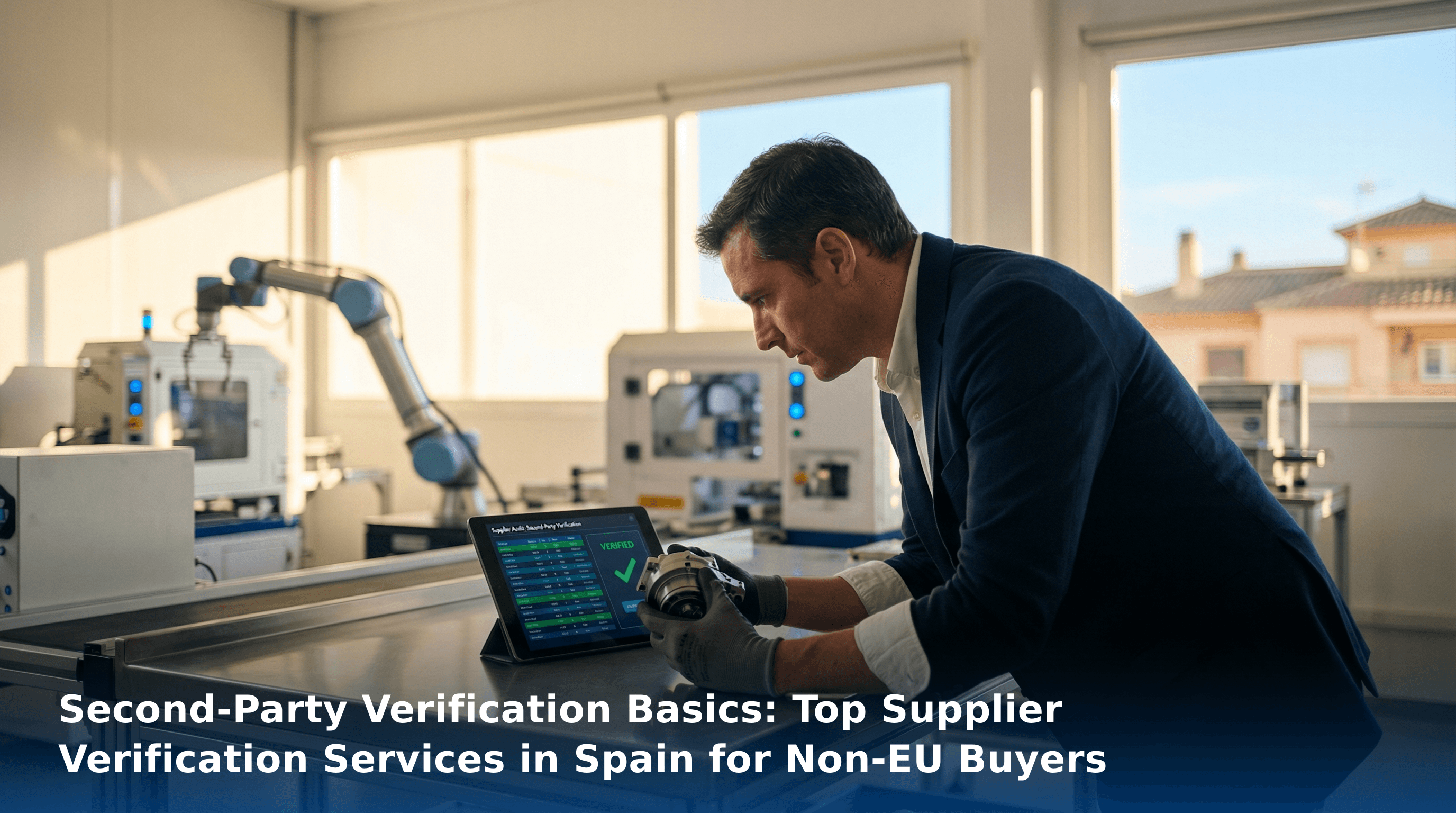
- Conduct second‑party factory audits: go beyond desktop “vendor registration” by sending audit teams or partners into plants in Andalusia, La Rioja, Emilia‑Romagna or Alentejo to assess capacity, hygiene, process control, traceability and export readiness.
- Validate certificates and documentation in local language: check that ISO, BRC/IFS, organic, sustainability or religious certificates are genuine, current and issued to the exact legal entity and factory address you will contract with.
- Cross‑check proof of origin and FTA eligibility: ensure bills of materials, supplier declarations and production records support the FTA’s rules of origin so that any preferential duty claim will stand up under CAROTAR‑style scrutiny.
- Test cultural and communication fit: use audits and visits to observe how owners and managers respond to tough questions, transparency requests and follow‑up—behaviour here is a leading indicator of how they will handle crises once volumes scale.
3. Execute: Close High‑Stake Deals With Risk Built In, Not Bolted On
- Embed verification outputs into contracts: use audit findings to set capacity limits, quality thresholds, documentation obligations and re‑audit triggers; link tariff savings to agreed ex‑works or FOB price bands.
- Align logistics and customs planning: synchronise your logistics providers, customs brokers and finance teams with the verification data so that declarations, HS codes, proofs of origin and certificates are consistent end‑to‑end.
- Maintain ongoing monitoring: treat first shipments as live tests; track claims, delays, documentation issues and corrective actions, and feed these back into supplier ratings for renewal or scale‑up decisions.
How Indian Firms Can Win in Southern Europe’s “Mid‑Market” Supplier Layer
The highest value of the India–EU FTA for Indian buyers may not sit with global brands, but with the mid‑sized producers in Southern Europe that are big enough to deliver quality, yet small enough to be flexible and hungry for India.
These family‑owned wineries, olive‑oil mills, cured‑meat producers, pasta factories, tile plants and machinery workshops often have limited in‑house export capacity, variable English and little understanding of Indian regulatory expectations—yet they are exactly where price‑quality combinations and margin potential are strongest.
Practical Moves for Indian Companies
- Build a curated supplier portfolio per category: rather than dealing with 40 random wine or olive‑oil producers, aim for 5–8 thoroughly audited partners in Spain, Portugal and Italy per category.
- Use on‑the‑ground scouts at trade fairs: instead of flying full Indian teams to every fair, deploy European‑based scouts to pre‑select booths, collect samples and run structured interviews, feeding candidates into your verification pipeline.
- Negotiate from a position of verified strength: show suppliers that you understand their costs, certifications and constraints; this opens the door to more sophisticated structures (exclusive territories, co‑branding, joint investments) anchored in mutual trust.
- Localise for Indian consumers: once product risk is under control, focus on Indian‑specific labelling, pack sizes, claims (vegan, vegetarian, non‑alcoholic, halal where relevant) and channel strategies for modern trade and HORECA.
By combining FTA economics with disciplined verification and cultural translation, Indian firms can become preferred partners for Southern European producers who see India not as a “one‑off shipment” but as a long‑term growth market.
From Policy Window to Playbook: What To Do in the Next 90 Days
The policy window opened by the India–EU FTA will not stay empty for long; competitors in India and Europe are already positioning themselves around olive oil, premium packaged foods, machinery and textiles.
Indian firms that act in the next 90 days can lock in better contracts, exclusivities and learning curves before the space becomes crowded.
Immediate Actions for Indian Procurement and Strategy Teams
- Run an FTA opportunity scan: map your current and potential purchases from the EU, estimate duty savings per category and prioritise 3–5 where Southern Europe is particularly strong.
- Launch a focused supplier‑discovery sprint: use fairs, chambers, sector associations and existing contacts to assemble a long list of EU suppliers in those categories.
- Commission targeted second‑party audits: select 10–15 high‑potential factories and commission on‑site verification in Spain, Portugal and Italy to build decision‑ready dossiers.
- Pilot one or two high‑stake deals: pick one category (e.g. olive oil or machinery) and move from shortlist to contract with verification embedded, creating an internal case study for your leadership.
The real test of whether your company has “used” the India–EU FTA will not be how many headlines you read, but how many verified, high‑margin supplier relationships you build in Southern Europe—relationships that survive audits, customs checks and crises because you invested early in sourcing, verifying and executing properly.